TL;DR: Category 3 water, also called black water, is the most contaminated class of water loss under professional water damage category standards. It includes sewage backups, rising floodwater, and any standing water that has sat long enough to grow bacteria. Porous materials like drywall, carpet, and insulation that contact Category 3 water are removed rather than dried. This is never a DIY job, and the reason is pathogen exposure, not just the mess.
You searched this because something happened at your home in Sterling Heights and the water does not look clean. Maybe a floor drain backed up in your basement near Van Dyke Avenue, or the sump pit overflowed during a heavy rain and the water sat overnight before you noticed it. Whatever the source, knowing which category you are dealing with tells you exactly how aggressive the cleanup needs to be.
What Are the Three Professional Water Damage Categories?
Industry standards divide water losses into three categories based on how contaminated the water is at the point of contact. Category 1 is clean water from a supply line or rain intrusion with no contact with contaminated surfaces. Category 2, sometimes called gray water, carries some biological or chemical contamination, such as water from a washing machine overflow or a dishwasher leak. Category 3 is grossly contaminated water that contains pathogens, sewage solids, or toxic agents.
Here is a quick side-by-side:
| Category | Common Name | Typical Sources | DIY Safe? |
|---|---|---|---|
| Category 1 | Clean water | Supply line break, rain through a roof | Limited, with quick action |
| Category 2 | Gray water | Washing machine overflow, toilet overflow (urine only) | No |
| Category 3 | Black water | Sewage backup, rising floodwater, stale standing water | Never |
One important note: categories can escalate. Category 1 water that sits for more than 24 to 48 hours, or that wicks into porous materials like carpet padding, can degrade to Category 2 or Category 3 conditions. The clock matters as much as the source.
What Counts as Category 3 Water?
Category 3 water is any water that is grossly contaminated with pathogens, sewage, or toxic chemicals. The three most common sources in Macomb County homes are sewage backups through floor drains or toilets, rising groundwater or surface floodwater that has contacted soil and debris, and standing water that has been left long enough for bacterial growth to reach dangerous levels.
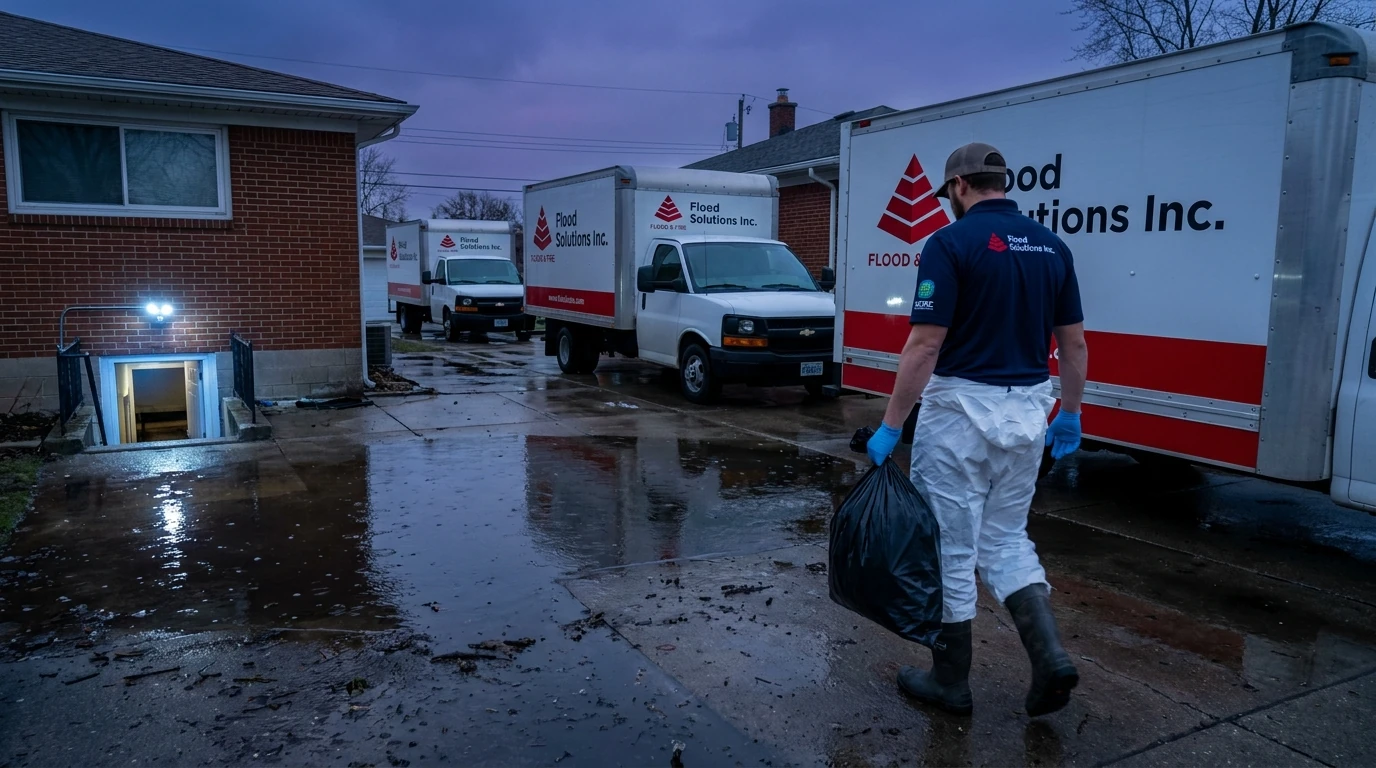
In Sterling Heights specifically, two situations come up regularly. The first is sewer line backups, which can happen when the municipal system gets overwhelmed during heavy rain events and wastewater pushes back through floor drains. The second is basement flooding from the Clinton River watershed that runs through the area, where water picks up soil contaminants before it enters a home. Both are Category 3 by definition, regardless of how the water looks or smells at first glance.
Stale water is worth calling out separately. A burst pipe in an unoccupied vacation home, or a slow appliance leak that was not discovered for weeks, can start as Category 1 and end up Category 3 by the time someone finds it. The water does not have to come from a sewer to be biologically dangerous.
Why Category 3 Water Damage Is Never a DIY Job
Category 3 water contains bacteria, viruses, and in some cases parasites that can cause serious illness through skin contact, inhalation of aerosols, or incidental ingestion. The EPA’s guidance on mold and water damage reinforces that large-scale contamination events require professional remediation with appropriate PPE, containment, and disposal protocols.
The practical reasons DIY fails here:
Containment. Professional crews set up physical containment using poly sheeting and negative-pressure air scrubbers to prevent cross-contamination to unaffected areas of the home. A shop vac and a mop do not do this.
PPE requirements. Proper Category 3 work requires full Tyvek suits, N95 or higher respirators, face shields, and double gloves. Most homeowners do not own this equipment and cannot source it quickly.
Porous material removal. Industry standards are explicit: porous materials that have been saturated with Category 3 water must be removed, not dried in place. This means drywall, carpet, carpet padding, insulation, and sometimes OSB subfloor. Attempting to dry these materials leaves pathogens embedded in the structure.
Verification. After cleanup, Category 3 jobs require ATP testing or similar methods to verify that contamination levels have been reduced to acceptable thresholds before reconstruction begins. There is no consumer-grade way to confirm this.
Skipping any of these steps does not just leave your home dirty. It can leave it structurally compromised and a health risk for your family.
What Happens During Category 3 Cleanup?
A professional Category 3 water damage response follows a defined sequence. Understanding it helps you know what to expect and what questions to ask.
1. Assessment and containment setup. The crew identifies the extent of contamination using moisture meters and thermal imaging, then establishes containment barriers to isolate the affected area. HEPA air scrubbers run continuously to capture airborne particulates.
2. Standing water extraction. Truck-mounted or portable extractors remove bulk water. This step happens before any material removal to reduce the load on the structure.
3. Porous material removal. Saturated drywall is cut out, typically 12 to 24 inches above the visible waterline to account for wicking. Carpet and padding are bagged and removed. Insulation is pulled. All of this is treated as contaminated waste.
4. Antimicrobial treatment. Structural surfaces, framing, and concrete are treated with EPA-registered antimicrobial agents. This is not optional for Category 3 work.
5. Drying of structural components. What remains after removal, typically concrete, framing, and masonry, is dried using commercial LGR dehumidifiers and high-velocity air movers. Drying times are monitored with daily moisture readings until the structure reaches its drying goal.
6. Clearance testing. ATP testing or air sampling confirms contamination levels are within acceptable limits before reconstruction begins.
7. Reconstruction. New drywall, insulation, and flooring are installed once clearance is confirmed.
For a deeper look at how long the full process takes from extraction through reconstruction, see How Long Does Water Damage Restoration Actually Take?.
Does Insurance Cover Category 3 Water Damage?
Whether your homeowners policy covers a Category 3 loss depends on the source of the water, not the category itself. Sudden and accidental losses, such as a sewage backup through a drain, are often covered if you have a sewer backup rider on your policy. Rising floodwater from outside the home is almost never covered under a standard homeowners policy and requires separate flood insurance through the National Flood Insurance Program.
Stale water situations, where a slow leak was not discovered for weeks, are frequently denied as maintenance failures rather than sudden losses. The documentation your restoration crew produces, including moisture readings, photos, and a written scope of work, is what supports your claim. Ask for all of it in writing before work begins.
For a plain-English breakdown of what policies typically cover and exclude, Does Homeowners Insurance Cover Water Damage? walks through the most common scenarios.
What to Do Right Now If You Have Category 3 Water in Your Home
Do not enter the affected area without waterproof boots and gloves at minimum. Turn off the water source if it is still active and you can do so safely. Do not run your HVAC system, which can spread contaminated air through the ductwork. Open windows in unaffected areas to ventilate if possible.
Then call a licensed restoration company that handles sewage cleanup. For Sterling Heights homeowners, Flood Solutions inc at (586) 580-0197 provides water damage restoration and sewage cleanup services across Macomb County. Request a written scope of work before any remediation begins, and notify your insurance carrier as soon as you have the scope in hand.
The faster Category 3 water is professionally extracted and the affected materials are removed, the lower the risk of secondary mold growth, which can begin in as little as 24 to 48 hours on wet porous surfaces. For more on that timeline, see How Quickly Does Mold Grow After Water Damage?
About Flood Solutions inc
Flood Solutions inc is a licensed and insured restoration company serving Sterling Heights, Macomb, Warren, Clinton Township, and surrounding communities in Macomb County since 1996. Their crews handle water damage restoration, sewage cleanup, water cleanup, and fire damage restoration across the region. License and insurance documentation available on request.