Emergency Sewage Cleanup and Sanitization in Macomb
Emergency sewage cleanup and sanitization in Macomb and surrounding areas. Insurance billing accepted. Call (586) 580-0197.
Sewage backup in Macomb? Call now for emergency service. Our crew responds fast to contain the contamination and start the cleanup.
The smell hits first. That sulfuric, unmistakable odor that tells you before you even see it that what backed up into your basement drain or utility room is not clean water. Raw sewage carries bacteria, viruses, and parasites that can colonize porous materials within hours of contact. The longer it sits, the deeper it penetrates, and the more of your home becomes unsalvageable. Sewage cleanup is not a mop-and-bleach job. It requires containment, proper extraction, EPA-registered disinfectants, and verification that pathogens have actually been eliminated.
What sewage cleanup and sanitization actually involves
Sewage water is classified as Category 3 under industry water damage standards, meaning it is grossly contaminated and must be handled with strict containment and sanitation from the first moment of contact. That classification changes everything about how the work is done.
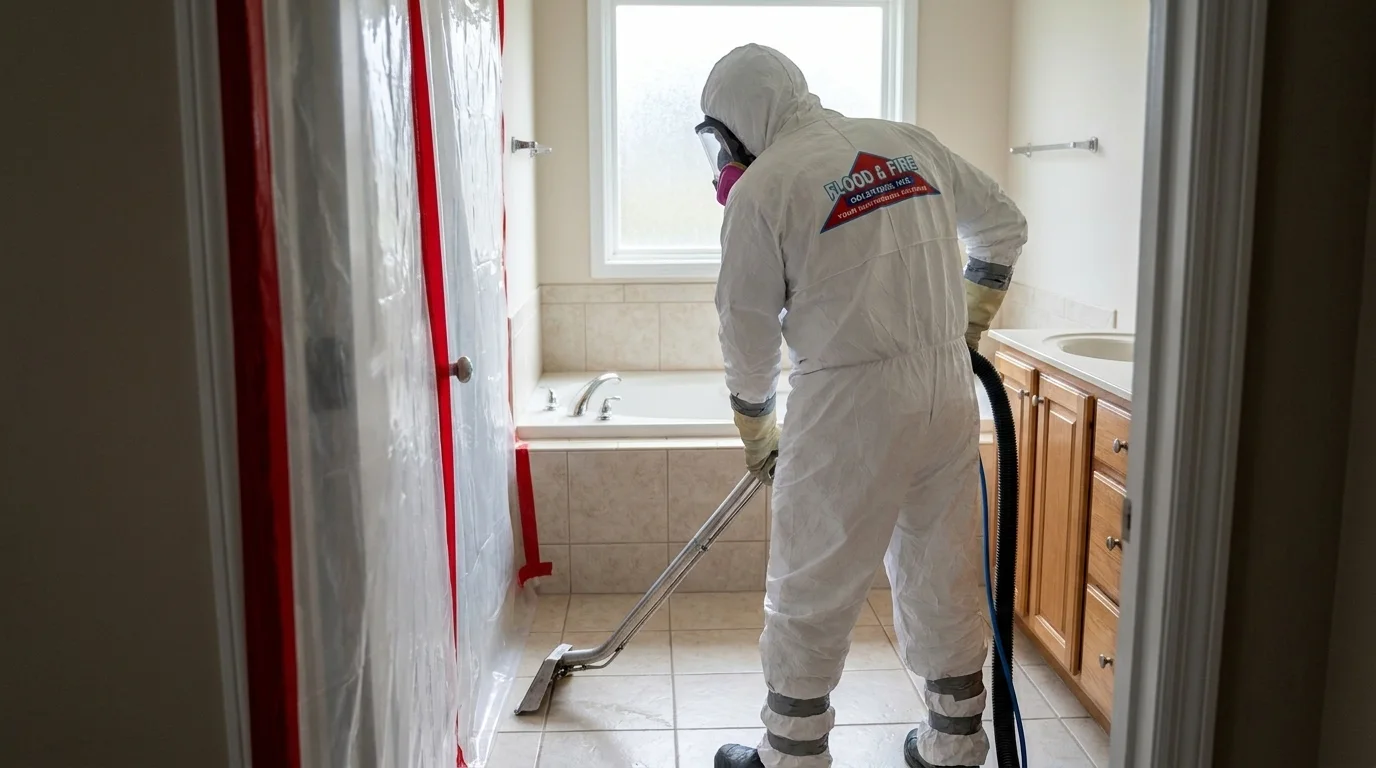
Crew members arrive in full personal protective equipment. Affected areas are isolated before any extraction begins to prevent cross-contamination to clean parts of the home. The visible waste is only the beginning. Sewage water wicks into drywall, soaks into subfloor materials, saturates insulation, and pools beneath finished flooring where it is invisible to the eye. Standard moisture meters alone are not enough. Thermal imaging and penetrating probes are used to map exactly how far contamination has traveled.
Once extraction is complete, porous materials that absorbed sewage, including drywall below the flood line, saturated insulation, and compromised flooring, are removed and properly disposed of as contaminated waste. What remains is treated with EPA-registered hospital-grade disinfectants applied in a specific sequence to achieve pathogen reduction, not just surface cleaning. Structural drying with commercial-grade air movers and dehumidifiers follows, and moisture readings are logged until the structure meets dry standard. The process typically spans two to five days depending on the size of the affected area and the construction materials involved.
Our process
-
Containment and PPE staging. Before any equipment enters the affected area, the space is isolated using physical barriers where needed to prevent sewage particulates from migrating to unaffected rooms. Crew members suit up in appropriate PPE before any contact with contaminated materials.
-
Sewage extraction and solid waste removal. Standing sewage water and solid waste are extracted using truck-mounted or portable extraction equipment rated for Category 3 losses. Waste is handled and disposed of in compliance with applicable health and environmental regulations.
-
Controlled demolition of unsalvageable materials. Drywall, insulation, flooring, and other porous materials that absorbed sewage are removed to clean, unaffected material. This is not optional. Disinfectant cannot penetrate deep enough to make saturated drywall or subfloor safe to keep in place.
-
EPA-registered disinfection and deodorization. All remaining surfaces in the affected zone are treated with EPA-registered disinfectants formulated for Category 3 contamination. This step is applied in passes, not a single spray-down. Odor treatment follows, targeting the bacterial source of the smell rather than masking it.
-
Structural drying and moisture verification. Commercial air movers and dehumidifiers run until moisture readings across all affected assemblies reach acceptable dry standard. Readings are documented at each visit so there is a written record that the structure was dried properly before reconstruction begins.
What separates a good sewage cleanup response from a bad one
The most common failure in sewage cleanup is treating it like a water damage job. Crews who skip or rush the containment step spread contamination to clean areas of the home. Crews who apply disinfectant to wet surfaces before extraction is complete are wasting product and leaving the pathogen load largely intact. Disinfectants require contact time and dry surfaces to work.
The second most common failure is leaving porous materials in place. Some operators will attempt to dry and treat saturated drywall or subfloor rather than remove it, either to save the homeowner money or to move faster. Insurance adjusters and industrial hygienists reviewing a completed sewage job look specifically at whether affected porous materials were properly removed. Leaving them is a liability that can resurface months later as mold growth or persistent odor.
Documentation is what protects the homeowner. A properly run sewage cleanup produces a written moisture log, before-and-after photographs of every affected area, a manifest of removed materials, and a record of the disinfectants applied including their EPA registration numbers. Without that paperwork, an insurance carrier has grounds to dispute the claim, and a future buyer’s inspector has no way to verify the work was done correctly.
What does sewage cleanup and sanitization cost?
Typical costs for sewage backup cleanup depend heavily on the source of the backup, how far contamination spread, and how much material requires removal. Most homeowners pay somewhere between $2,000 and $10,000 for a residential sewage loss, though larger or more complex losses can exceed that range. The table below reflects typical industry figures, not a quote from Flood & Fire Solutions.
| Scenario | Typical range |
|---|---|
| Single floor drain backup, limited spread | $1,500 - $3,500 |
| Basement backup with finished flooring affected | $3,000 - $7,000 |
| Septic overflow with soil and exterior contamination | $4,000 - $10,000 |
| Sewer line backup affecting multiple rooms | $5,000 - $12,000 |
| Backup with full subfloor and wall cavity involvement | $8,000 - $18,000+ |
Every loss is different, and Flood & Fire Solutions provides a written scope of work before any work begins so there are no surprises. Homeowners insurance typically covers sudden and accidental sewage backups, though coverage depends on whether the policy includes a sewer backup rider, which is a separate endorsement many homeowners do not realize they are missing until they need it.
Seasonal and regional considerations
Macomb County sits over clay-heavy soils that drain slowly. During spring thaw and heavy rain events, municipal sewer systems in older neighborhoods can surcharge, pushing sewage back through floor drains and basement fixtures. Homes built before the 1980s in communities like Center Line, Warren, and Roseville are particularly susceptible because many were built before backwater valves were standard practice. Late winter through early spring is peak season for sewer line backups in this region, but aging infrastructure means backups can happen in any month.
Septic system overflows follow a different seasonal pattern. Saturated ground in spring limits the drain field’s ability to absorb effluent, and systems that are due for pumping often fail during that window.
Service area
Flood & Fire Solutions is based in Macomb, MI and handles sewage backup cleanup and sanitization services throughout Macomb County and the surrounding region, including Sterling Heights, Warren, Clinton Township, Shelby Township, Utica, Roseville, and neighboring communities. The city-specific pages linked from this site go deeper on local considerations for each area.
If sewage has backed up into your home, the clock matters. Call Flood & Fire Solutions at (586) 580-0197 to get a written scope and start the sanitization process before contamination spreads further.
Services We Handle
- Basement Sewage Cleanup
- Category 3 Water Cleanup
- Cleaning and Sanitizing
- Drain Backups
- Gray Water
- Overflowing Toilet
- Septic Backups
- Sewage Backup Cleanup
- Sewage Cleanup & Remediation
Frequently Asked Questions
Does homeowners insurance cover sewage backup cleanup?
What is the difference between a sewer line backup and a septic overflow, and does it change how cleanup is done?
Can I clean up a sewage backup myself with bleach and a wet vac?
How do I know if sewage contamination has spread beyond what I can see?
What should I do while waiting for the sewage cleanup crew to arrive?
Looking for the best sewage cleanup and sanitization company in Macomb?
Flood Solutions inc provides sewage cleanup and sanitization in Macomb, MI and the surrounding area, and has served local property owners since 1996. Customers rate us 4.4 out of 5 stars across 35 Google reviews. We answer calls 24/7 — call (586) 580-0197 for immediate help.
Need Sewage Cleanup and Sanitization now?
We respond 24/7 across Macomb and surrounding MI cities.
Related Coverage
- Our Restoration Services
- Contact Flood & Fire Solutions
- Emergency Water Damage Restoration in Macomb
- Mold Remediation in Macomb
- Emergency Storm Damage Restoration in Macomb
- Emergency Smoke Damage Restoration in Macomb
- Emergency Flood Damage Restoration in Macomb
- Emergency Sewage Cleanup and Sanitization in Chesterfield
- Emergency Sewage Cleanup and Sanitization in Clinton Township
- Emergency Sewage Cleanup and Sanitization in Rochester Hills
- Emergency Sewage Cleanup and Sanitization in Shelby Township
- Emergency Sewage Cleanup and Sanitization in Sterling Heights
- Emergency Sewage Cleanup and Sanitization in Troy
- Emergency Sewage Cleanup and Sanitization in Utica
- Emergency Sewage Cleanup and Sanitization in Warren