
TL;DR: For a sewage backup in a Macomb, MI home, call a licensed plumber or Macomb Township’s water and sewer department first if sewage keeps coming up a floor drain, tub, or toilet, that stops the backflow. Once the line is clear, call Flood Solutions inc at (586) 580-0197, a 24/7 restoration company serving Macomb since 1996, for the Category 3 cleanup, sanitizing, and drying; it does not handle the plumbing repair itself.
If sewage is backing up through the floor drain in your Macomb basement, bubbling into the tub, or rising in the downstairs toilet right now, you’re dealing with two separate problems at once: a plumbing blockage somewhere in the line, and contaminated water already sitting on your floor, subfloor, and anything it touched. Both need a phone call, but not the same phone call. Knowing which one to make first, and which company actually does which job, is what keeps a bad morning from turning into a bigger bill. Here’s the order that actually works.
Who do I call first, a plumber or a restoration company?
Call a licensed plumber, or Macomb Township’s water and sewer department if the blockage is in the public main, before anyone touches the water. A plumber’s snake or jetting clears the line actually causing the backup; a restoration company can’t fix a clog and shouldn’t be the first call while sewage is still rising.
Most residential backups in Macomb trace to a clogged or collapsed lateral line, tree roots in older clay pipe, or a sump pit that can’t keep up during heavy rain. Those are private-side plumbing problems and fall to a licensed plumber. If neighbors on the same block are reporting backups around the same time, the blockage is more likely in the municipal main, and the township’s water and sewer department needs the call instead of a private plumber.
Once the plumber, or the township, confirms the line is open and sewage has stopped rising, that’s the moment to bring in a restoration company. Cleaning Category 3 water before the source is fixed usually just means doing the work twice.
What do I do if sewage is backing up through a bathtub, shower, or floor drain?
Stop using every drain, toilet, and faucet in the house immediately. Sewage backing up in one fixture means the line is full, and anything else you flush or drain will come right back up somewhere else.
A floor drain bubbling in the basement, a shower that won’t drain, and a toilet that overflows on its own are usually the same problem showing up in different spots: wastewater has nowhere to go, so it finds the lowest or weakest point in the system. Keep kids and pets out of the affected room. Don’t run a shop-vac on sewage water; standard shop-vacs aren’t built to handle Category 3 water safely and can aerosolize contaminated water into the air.
A few things that help while you wait:
- Shut off the water main if the backup is getting worse, not better.
- Crack a window in the affected room for ventilation, not to dry the water.
- Keep the furnace or AC off if a return vent sits in the affected room, so contaminated air doesn’t get pulled through the ductwork.
Is it safe to stay in a house with a sewage backup?
It’s not safe to spend time in the room where sewage backed up. Raw sewage is classified as Category 3, or black water, under the IICRC S500 standard, meaning it can carry bacteria, viruses, and parasites that pose a real health risk on contact or once it dries and becomes airborne dust.
The rest of the house is generally fine as long as the contaminated water hasn’t spread past the original room and the HVAC system hasn’t pulled odors or aerosols elsewhere. The CDC’s guidance on cleaning up safely after a disaster recommends treating any sewage contact as contaminated: wash hands after contact, keep children and pets away, and don’t eat or drink anything that touched the water. Porous materials that sat in Category 3 water, carpet pad, drywall below the waterline, upholstered furniture, usually can’t be sanitized and have to be removed rather than cleaned. For a closer look at what that classification means for drywall and flooring specifically, see our guide on Category 3 water damage.
What happens when the restoration crew arrives?
A restoration crew contains the affected area, extracts the standing water, removes any contaminated porous material, and disinfects and dries what remains, all documented for the insurance claim.
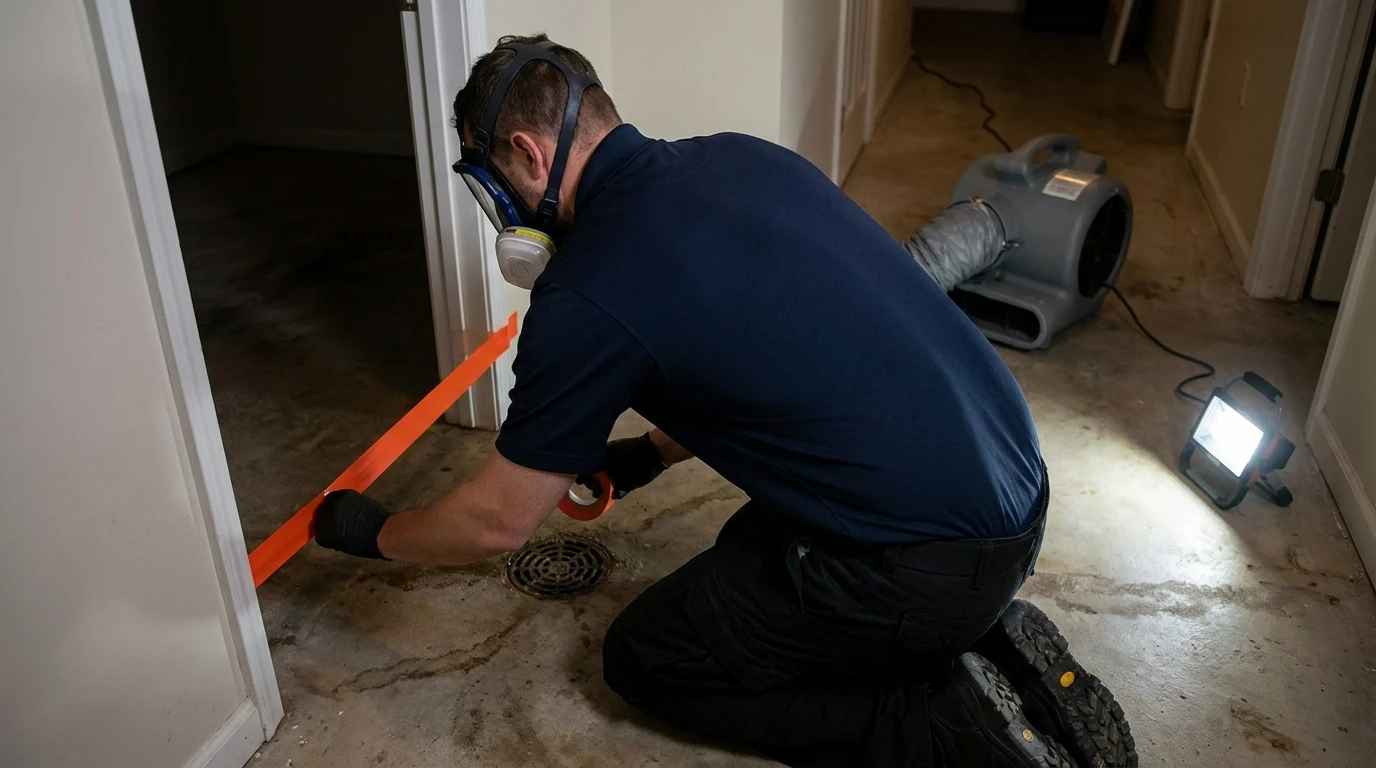
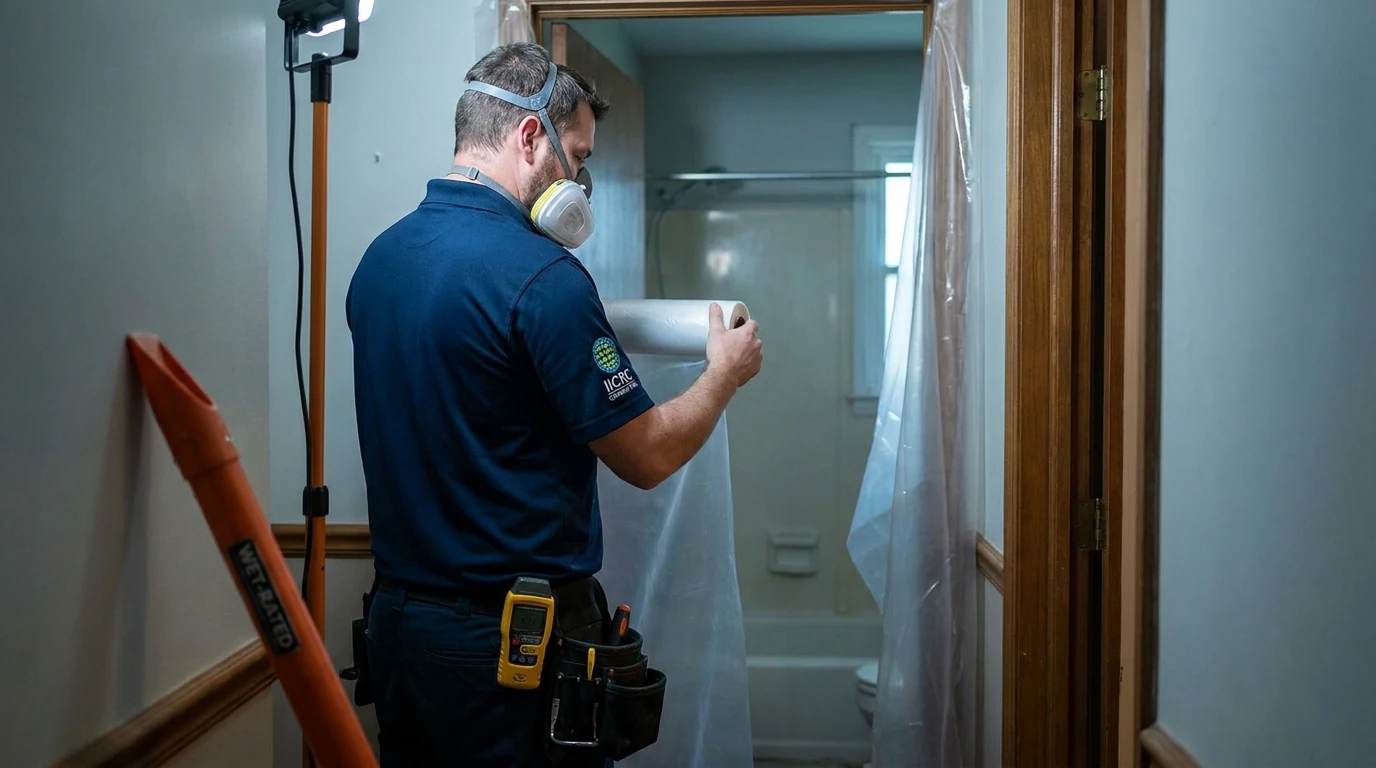
- Contain the area with plastic sheeting and negative air where needed, so contamination doesn’t spread to clean rooms.
- Extract standing water with pumps and extractors rated for contaminated water.
- Remove and discard porous materials that soaked in Category 3 water, carpet, pad, and sometimes baseboards or drywall.
- Clean and disinfect remaining hard surfaces with EPA-registered antimicrobials.
- Set air movers and dehumidifiers to dry the structure to standard moisture targets, then verify with a moisture meter before closing the job.
- Document everything, photos, moisture readings, and a written scope, for the homeowner’s insurance claim.
Most homeowners policies exclude damage from a backed-up sewer or drain unless a sewer backup endorsement was added, so check the declarations page before assuming the cleanup is covered.
If sewage already backed up through a drain, tub, or toilet in your Macomb home and the plumbing issue is resolved, waiting even a day lets Category 3 water soak deeper into subfloors and wall cavities. Request a free consultation by calling (586) 580-0197, and get the cleanup started while the contamination is still limited to where it started.
About Flood Solutions inc
Founded in 1996, the company has worked out of Ira, MI for three decades, serving Macomb, Sterling Heights, Warren, Clinton Township, Troy, Rochester Hills, Shelby Township, Utica, and Chesterfield. It runs a 24/7 line, states it is licensed and insured, and holds a 4.4 Google rating across 35 reviews. Its crews handle sewage cleanup, water damage restoration, water extraction, fire damage restoration, emergency board-up, content recovery, and ice dam mitigation, but plumbing repair is outside its scope: clearing the line itself is a licensed plumber’s job.