Emergency Storm Damage Restoration in Macomb
Emergency storm damage restoration in Macomb and surrounding areas. Insurance billing accepted. Call (586) 580-0197.
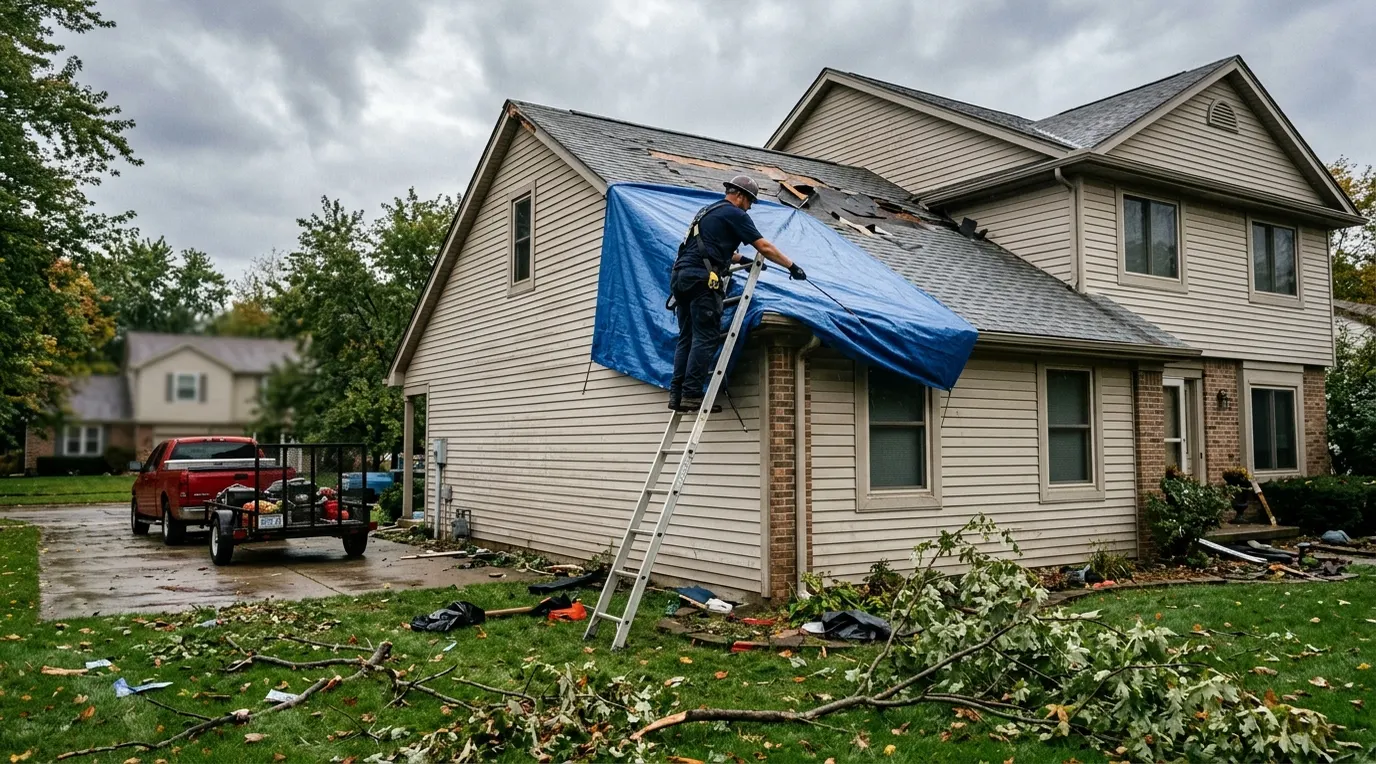
Storm damage emergency in Macomb? Call now for emergency service. Our crew responds fast to secure the property and stop further damage.
What storm damage actually involves
A severe storm doesn’t just break windows and scatter shingles. It opens your home’s envelope to water intrusion, structural stress, and secondary damage that compounds by the hour. A tree limb punching through a roof at 2 a.m. exposes attic insulation and ceiling drywall to rain before any crew can respond. Wind-driven water migrates behind siding, soaks wall cavities, and sits in places that look perfectly dry from the inside. The visible damage is rarely the whole story.
Storm damage restoration covers the full scope of what severe weather leaves behind: emergency tarping and board-up to stop active intrusion, debris removal, structural assessment, water extraction from wind-driven rain, and coordinated reconstruction of everything the storm tore open. It is not a single trade. A competent response pulls together roofing, carpentry, water mitigation, and sometimes mold prevention into one managed sequence.
Our process
1. Emergency stabilization Before any assessment form is filled out, the priority is stopping the bleeding. Open roof sections get tarped. Broken windows and doors get boarded. If a tree is still in contact with the structure, we document its position and work around it safely until removal is complete. This step determines how much secondary damage you avoid.
2. Damage documentation and scope development Every affected surface is photographed, measured, and logged before a single piece of debris moves. Wind uplift, impact points, water migration paths, and structural deflection are all noted. This documentation is what your insurance adjuster will use to authorize the claim, and gaps here cost homeowners money later.
3. Debris removal and structural assessment Tree limbs, displaced roofing materials, and shattered components are removed in a sequence that protects the structure underneath. Once the debris is clear, we assess framing, sheathing, and load-bearing elements for damage that isn’t visible from the exterior. Compromised rafters and headers don’t always announce themselves.
4. Water intrusion mitigation Any storm that opened the building envelope likely introduced water. We use moisture meters and thermal imaging to trace where wind-driven rain traveled inside wall assemblies and above ceilings. Wet insulation is removed. Affected cavities are dried with commercial air movers and dehumidifiers before reconstruction begins, because sealing wet framing is what creates mold problems weeks later.
5. Reconstruction and closeout Repairs follow the documented scope: roofing, siding, windows, framing, insulation, drywall, and finish work. The goal is returning the home to pre-loss condition, not a patchwork of mismatched materials. Final inspection confirms that the building envelope is fully closed and watertight.
What separates a good storm damage response from a bad one
The most common failure in storm damage work is treating it as a roofing job. A roofer who patches the penetration but never checks the ceiling cavity below it leaves saturated insulation in place. That insulation holds moisture against the sheathing for weeks. By the time the homeowner notices a stain or a smell, mold has already colonized the framing.
A second common gap is incomplete documentation before debris removal. Once a tree is cut and hauled away, the impact geometry is gone. Insurance adjusters rely on that evidence to authorize structural repairs beyond the obvious. Experienced storm restoration crews photograph impact craters, stress fractures in rafters, and displaced flashing before the chainsaw starts.
Insurance adjusters also look closely at the line between storm-caused damage and pre-existing deterioration. Worn shingles that failed because of age rather than wind load are handled differently than shingles that were torn off by a documented storm event. A thorough scope distinguishes the two clearly, which protects the claim.
Finally, wind-driven rain behaves differently than plumbing water. It enters at angles, travels along framing members, and pools in places that defy gravity logic. Crews trained only on plumbing leaks sometimes miss it entirely.
What does storm damage restoration cost?
Typical costs for storm damage restoration vary widely depending on what the storm opened up and how long water had to travel inside the structure. Most homeowners pay somewhere in the range below for common loss scenarios. These are industry-typical figures, not quotes from Flood Solutions inc. Every loss is different, and Flood Solutions inc provides a written scope of work before any restoration begins so you know exactly what is covered and why.
Homeowners insurance typically covers sudden storm damage to the dwelling, including wind, hail, and falling trees, subject to your deductible and policy exclusions. Flood damage from ground water is generally covered under a separate flood policy.
| Scenario | Typical range |
|---|---|
| Single tree limb, minor roof penetration, no interior water | $1,500 – $4,500 |
| Partial roof loss with wind-driven rain into attic | $8,000 – $22,000 |
| Large tree through roof with structural framing damage | $18,000 – $55,000 |
| Siding and window damage, no structural compromise | $3,000 – $9,000 |
| Full roof replacement plus interior drying and drywall | $20,000 – $60,000+ |
Seasonal and regional considerations
Macomb County sits in a corridor that sees lake-effect weather systems from Lake Huron and Lake St. Clair, which means fast-moving storms with high straight-line winds are a regular feature of spring and early summer. The region’s housing stock includes a significant number of homes built in the 1950s through 1980s with older roofing underlayment and aging siding profiles that are more vulnerable to uplift than newer construction.
Fall storms in southeast Michigan arrive with less warning than summer thunderstorms and often coincide with leaves clogging gutters, which forces roof runoff to back up under flashing. Ice storm events in late fall and early spring can add weight loading that compromises already-stressed roof sections. Timing a repair before the next weather system moves through matters here.
Service area
Flood Solutions inc is based in Macomb and serves communities throughout Macomb County and the surrounding region, including Sterling Heights, Clinton Township, Shelby Township, Chesterfield, New Baltimore, Warren, and St. Clair Shores. Service-area-specific pages for each city link back to this page for the full technical detail on what storm restoration involves.
Services We Handle
- Commercial Storm Damage
- Commercial Wind Damage Cleanup
- Commercial Wind Damage Restoration
- Emergency Storm Damage Repair
- Fallen Trees
- Hurricane Damage Restoration
- Leaky Roofs
- Natural Disasters
- Storm and Water Damage
- Storm Damage Assessment
- Storm Damage Cleanup
- Storm Damage Mitigation
- Storm Recovery
- Wind and Storm Damage Restoration
- Wind Damage Repair
Frequently Asked Questions
Does homeowners insurance cover storm damage restoration?
A tree fell on my roof last night. What should I do before the crew arrives?
How do you find water damage inside walls after a storm when the surface looks dry?
How long does storm damage restoration take from tarping to finished repairs?
What storm damage do insurance adjusters commonly dispute or underpay?
Looking for the best storm damage restoration company in Macomb?
Flood Solutions inc provides storm damage restoration in Macomb, MI and the surrounding area, and has served local property owners since 1996. Customers rate us 4.4 out of 5 stars across 35 Google reviews. We answer calls 24/7 — call (586) 580-0197 for immediate help.
Need Storm Damage Restoration now?
We respond 24/7 across Macomb and surrounding MI cities.
Related Coverage
- Our Restoration Services
- Contact Flood & Fire Solutions
- Emergency Water Damage Restoration in Macomb
- Mold Remediation in Macomb
- Emergency Sewage Cleanup and Sanitization in Macomb
- Emergency Smoke Damage Restoration in Macomb
- Emergency Flood Damage Restoration in Macomb
- Emergency Storm Damage Restoration in Chesterfield
- Emergency Storm Damage Restoration in Clinton Township
- Emergency Storm Damage Restoration in Rochester Hills
- Emergency Storm Damage Restoration in Shelby Township
- Emergency Storm Damage Restoration in Sterling Heights
- Emergency Storm Damage Restoration in Troy
- Emergency Storm Damage Restoration in Utica
- Emergency Storm Damage Restoration in Warren