What Actually Happens After a House Fire
Fire damage restoration is not a single event, it is a staged process that unfolds over days or weeks, depending on how much the fire burned, how long the smoke circulated, and how much water the suppression effort left behind. The short version: crews secure the structure, remove debris and contaminated materials, dry everything that got wet, clean and deodorize every surface smoke touched, and then rebuild. Each phase has to happen in sequence, because skipping ahead creates problems that cost more to fix later.
Phase 1: Emergency Stabilization (Hours 0 to 24)
Before any cleaning or drying begins, the structure has to be safe to enter and protected from further damage. This phase typically starts the same day the fire department clears the property.
What happens during stabilization:
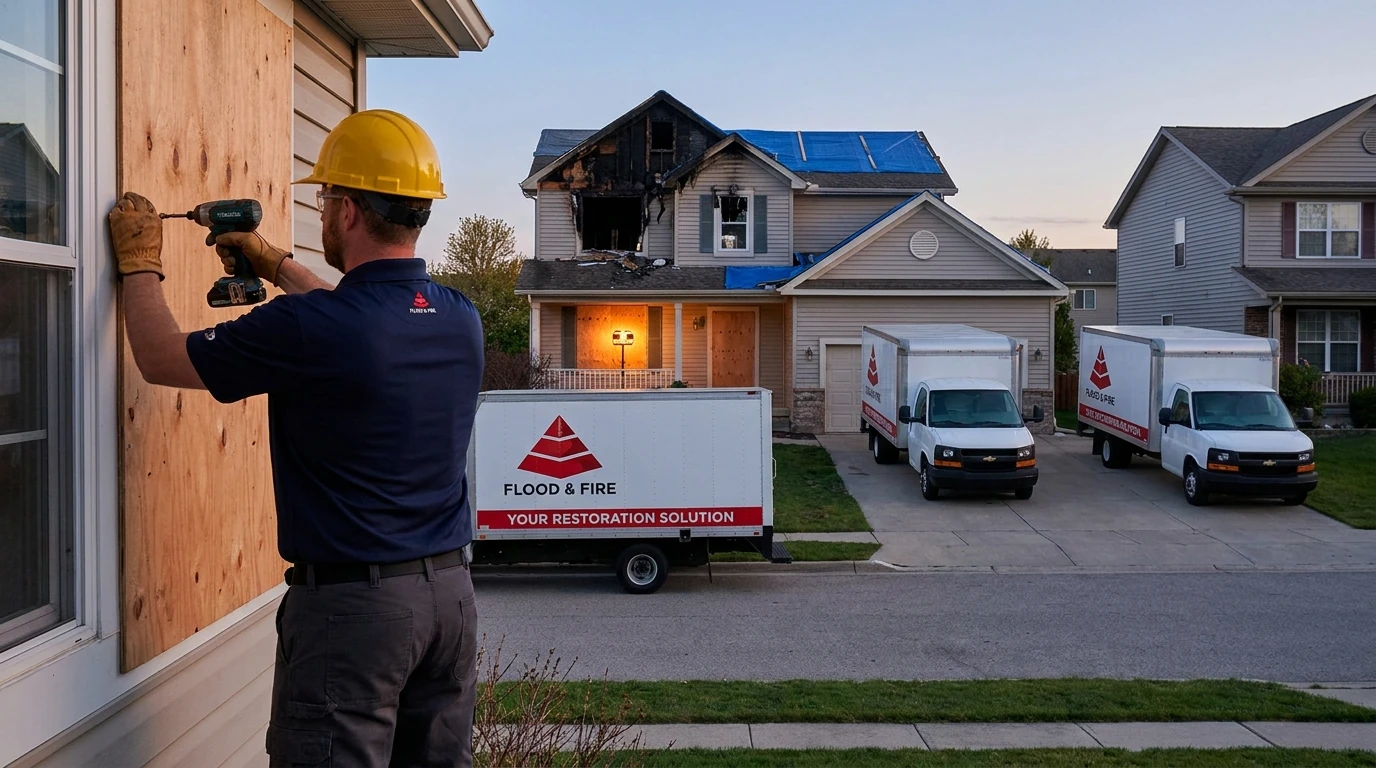
- Board-up and tarping. Windows, doors, and roof sections compromised by fire or firefighting are covered. An open structure after a fire is a target for weather, animals, and theft.
- Utilities assessment. Electrical panels, gas lines, and plumbing are evaluated before anyone works inside. A restoration crew will not operate in a structure with live wiring that ran through a burn zone.
- Structural evaluation. A technician walks the property to identify load-bearing walls, floors, or roof sections that may have been weakened. Charred wood loses structural integrity fast, and what looks solid can fail underfoot.
- Content inventory. Salvageable belongings are separated from total losses and documented for your insurance claim. Smoke-damaged items that look ruined are sometimes restorable through specialized cleaning.
This phase is not glamorous, but it determines whether everything that follows goes smoothly.
Phase 2: Water Removal and Drying
This step surprises most homeowners: after a fire, water damage is often as extensive as the fire damage itself. A single fire hose can deliver hundreds of gallons per minute. That water saturates flooring, soaks into wall cavities, and pools in basements and crawlspaces.
If the water is not extracted and the structure dried within the first 24 to 48 hours, mold colonization begins in the wet materials. In a Michigan home with plaster walls or older wood framing, moisture hides in places that read dry at the surface while staying saturated underneath.
Drying after a fire follows the same technical standards as any water loss: moisture readings are taken throughout the structure, industrial air movers and dehumidifiers are placed strategically, and readings are logged daily until the materials reach their target moisture content. The drying phase can take anywhere from three days to two weeks depending on the materials involved and how much water was introduced.
Do not assume the structure is dry because it feels dry. Wet drywall and wet insulation do not always feel wet to the touch.
Phase 3: Smoke and Soot Removal
This is the phase most people underestimate. Smoke does not stay where the fire was. It travels through HVAC ducts, seeps behind electrical outlets, settles into soft goods, and coats surfaces in rooms that never saw a flame. In a house fire, smoke from synthetic materials (carpet, foam furniture, vinyl flooring) produces a greasy, acidic soot that etches into porous surfaces quickly.
Within hours of a fire, soot begins to permanently stain:
- Painted walls and ceilings
- Grout lines in tile
- Cabinet interiors
- Clothing and upholstery
- HVAC components
The longer soot sits, the harder it is to remove without abrading or replacing the underlying surface. Professional smoke remediation uses a combination of dry-sponge cleaning, chemical sponges, alkaline or acidic cleaning agents matched to the soot type, and HEPA-filtered equipment. The process is methodical and slow, working from the top of each room down.
Odor is a separate challenge. Smoke odor is not eliminated by masking it. The source particles have to be physically removed or chemically neutralized. Thermal fogging and ozone treatment are two methods used after surface cleaning is complete, but they are only effective once the soot itself is gone. If you smell smoke weeks after a fire, it almost always means residue was missed or the HVAC system was not properly cleaned.
What Not to Do After a Fire
Some of the most common mistakes homeowners make in the hours after a fire make the restoration harder and the insurance claim messier.
- Do not run the HVAC system. If soot has entered the ductwork, running the system distributes it to every room in the house.
- Do not wipe soot with a wet cloth. Wet soot smears into porous surfaces and sets. Dry-sponge methods come first.
- Do not discard anything before it is documented. Your insurance adjuster and the restoration team need to see the damage as it was. Throwing things away before documentation can reduce your claim.
- Do not assume a room is safe because it looks undamaged. Smoke byproducts are not always visible, and some combustion gases linger in enclosed spaces.
- Do not start painting or patching walls yourself. Painting over smoke-affected drywall without proper cleaning seals in odor and the paint will blister or discolor within months.
Phase 4: Reconstruction
Once the structure is dry, decontaminated, and cleared for work, the rebuild phase begins. Depending on the severity of the fire, this can range from replacing a few sheets of drywall and repainting to a full gut-and-rebuild of affected rooms.
In Macomb County, reconstruction after a fire requires permits for structural, electrical, and plumbing work. The permit process adds time, but it also protects you: permitted work is inspected, which matters when you eventually sell the property or file a future insurance claim.
Common reconstruction tasks after a residential fire include:
- Replacing fire-damaged framing, sheathing, or roof decking
- Installing new insulation where the old material absorbed smoke or water
- Hanging and finishing new drywall
- Replacing flooring that was burned, water-damaged, or soot-contaminated
- Repainting with odor-blocking primer before finish coats
- Restoring or replacing cabinetry, trim, and fixtures
The timeline for reconstruction depends on contractor availability, permit lead times, and the scope of work. A minor fire with contained damage might reach move-in condition in two to three weeks. A fire that involved structural members or spread through multiple rooms can take several months.
Getting Through It
Fire damage is one of the more disorienting losses a homeowner can face because the damage is visible, the smell is persistent, and the process is long. Understanding the sequence helps: stabilization first, then drying, then smoke remediation, then rebuild. Each phase has to be completed before the next one starts.
If you are in Macomb or the surrounding area and trying to figure out your next step, Flood Solutions Inc handles fire damage restoration and smoke damage remediation and can walk you through what the process looks like for your specific situation. Call (586) 580-0197 to talk through what happened and what comes next.