
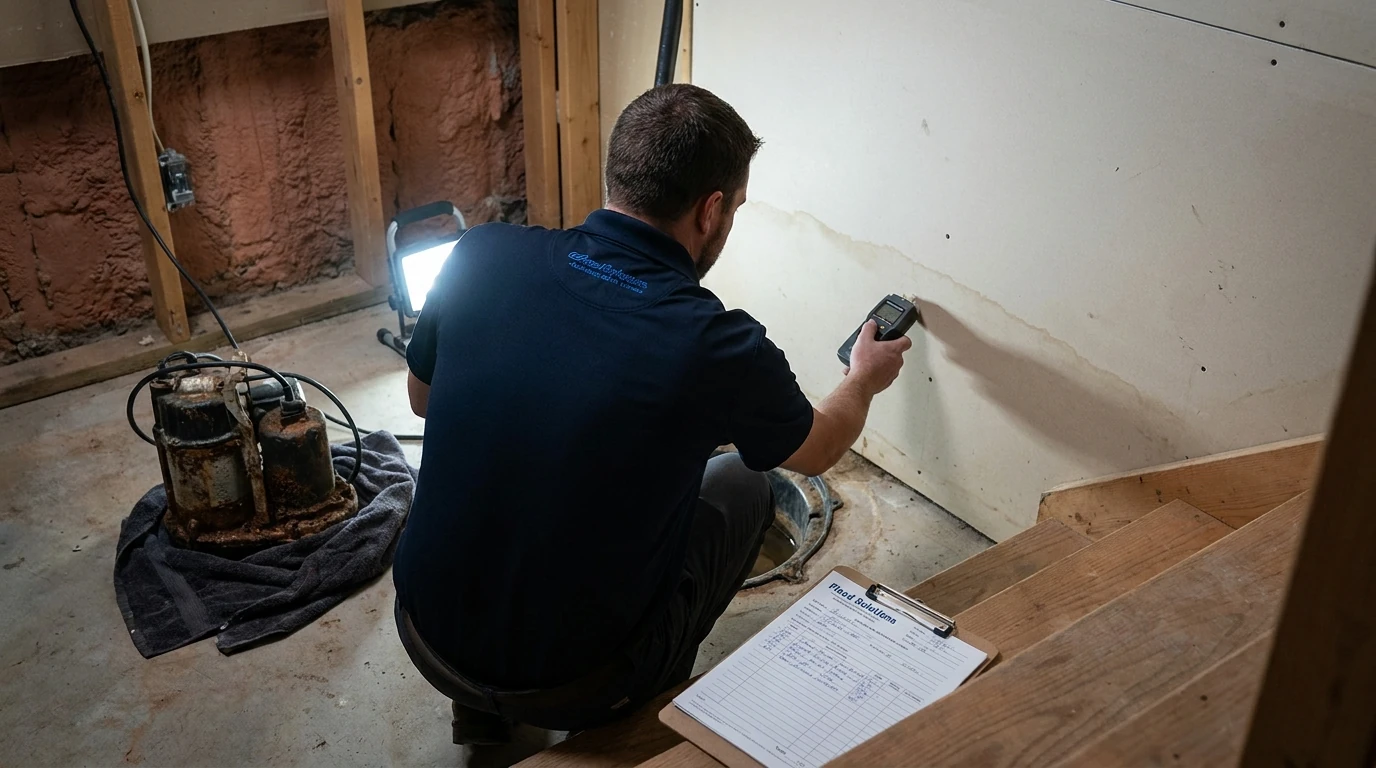
TL;DR: A standard Michigan homeowners insurance policy does not cover water damage from sump pump failure or sewer backup. That coverage only exists if you’ve purchased a water backup endorsement (sometimes called a sump overflow rider), which typically adds $50 to $250 a year for $5,000 to $25,000 in coverage. Without it, a flooded basement from a failed sump pump is an out-of-pocket loss, even though the water itself looks identical to a covered pipe burst.
If your sump pump quit during last week’s rain and you woke up to two inches of standing water in your Macomb County basement, the first question isn’t “how do I dry this out,” it’s “will my insurance actually pay for this.” Macomb County sits on heavy clay soil with a high water table, which is exactly why sump pumps run so often here and exactly why this gap in coverage trips up so many homeowners from Macomb Township through Clinton Township and out toward Lake St. Clair. The honest answer is usually no, unless you bought the right endorsement.
Does Standard Homeowners Insurance Cover Sump Pump Failure?
No. A standard HO-3 homeowners policy specifically excludes water that enters through a sump pump overflow, a failed sump system, or backed-up sewers and drains. This exclusion shows up in nearly every major carrier’s policy language sold in Michigan.
The logic insurers use is that sump pump failure and sewer backup fall under “water that isn’t sudden or accidental in the way a burst pipe is.” A pipe bursts once, catastrophically. A sump pump can fail gradually (a worn float switch, a clogged check valve, a tripped breaker during a storm) or all at once during a power outage, but insurers treat both scenarios the same way: excluded unless you’ve added coverage back in. The Michigan Department of Insurance and Financial Services publishes consumer guidance on exactly this gap because it’s one of the most common coverage surprises homeowners run into after a basement flood.
This is also why the damage can be covered or denied based on a single sentence in your policy, even though the water in your basement looks the same either way. The cause matters more than the result.
How Is Sewer Backup Coverage Different From a Water Backup Endorsement?
Sewer backup and sump pump overflow are usually bundled into the same optional endorsement, often called “water backup and sump discharge/overflow” coverage. One rider typically covers both causes, not two separate policies.
Sewer backup happens when municipal or private sewer lines can’t handle stormwater volume and water pushes back up through your floor drains or toilets. Sump pump failure happens when groundwater that your sump system is supposed to manage overflows the pit instead, usually during the same kind of heavy rain event. Because Macomb County’s older sanitary and storm systems in communities like Warren and Sterling Heights can surcharge during intense storms, both failure modes tend to happen together: the sump can’t keep up at the same time the sewer system is under stress.
If your policy declarations page doesn’t list a specific dollar amount next to “water backup” or “sump overflow,” you don’t have this coverage, regardless of what your agent told you verbally when you bought the policy. Pull the actual declarations page and look for the line item.

How Much Does a Water Backup Endorsement Cost in Michigan?
A water backup endorsement typically costs $50 to $250 per year in Michigan, for coverage limits ranging from $5,000 to $25,000. Some carriers offer higher limits, up to $50,000, for a correspondingly higher premium.
A few things to check before assuming you’re covered:
- Sub-limits for finished basements. Many endorsements cap personal property and finished-space repair separately from the headline coverage number.
- A separate deductible. Some policies apply a flat deductible (often $500 to $1,000) to water backup claims that’s different from your regular wind/fire deductible.
- Whether it covers the sump pump itself. Some endorsements pay to replace a failed pump; others only cover the resulting water damage, not the equipment.
For a Macomb County homeowner with a finished basement, carpet, drywall, and a furnace or water heater down there, $10,000 to $15,000 in coverage is a reasonable starting point to ask your agent to quote. Given how often sump systems run in this part of Michigan, this is one of the few endorsements where the annual cost is genuinely small relative to the exposure.
What Should You Do If Your Sump Pump Fails and Your Basement Floods?
Shut off power to anything submerged, call your insurance agent to confirm whether you have the endorsement, and start mitigation immediately regardless of the answer, because every policy requires you to limit further damage.
Here’s the sequence that protects both your home and your claim, if you have one:
- Cut power at the breaker to any outlets or equipment in standing water before anyone steps back into the basement.
- Photograph everything before you move or remove anything - the water line on the walls, the sump basin itself, the failed float switch or pump, and any damaged belongings.
- Call your agent same-day and ask directly: “Do I have a water backup or sump overflow endorsement, and what’s the limit?” Get the answer in writing or save the email.
- Start extraction and drying within 24 to 48 hours. Standing water in a Michigan basement in fall humidity creates conditions for mold growth fast, and insurers (even on covered claims) expect documented, prompt mitigation.
- Keep every receipt for emergency services, temporary equipment rental, and any contents you had to discard.
Our crews follow drying and moisture-documentation protocols aligned with the IICRC S500 standard for water damage restoration, which gives you a defensible paper trail whether the claim is approved, denied, or you’re paying out of pocket and want the lowest total repair cost. If you’re not sure where your water came from, read our broader breakdown of what homeowners insurance actually covers for water damage before you file anything.
If your basement has flooded before and you want to reduce the odds of a repeat, our guide on preventing basement flooding covers backup power for sump systems and battery backup units, which is the most common fix we see after a failure like this.
A flooded basement from a dead sump pump is a plumbing and electrical problem first, an insurance question second. Get the water out, document the failure, and let the coverage conversation happen in parallel, not instead of drying out your home.
About Flood Solutions inc
Flood Solutions inc is a licensed and insured restoration company based in Ira, MI, serving Macomb County and the surrounding communities since 1996. Their crews handle water damage restoration, water cleanup, sewage cleanup, fire damage restoration, and related emergency services across Macomb, Sterling Heights, Warren, Clinton Township, Troy, and Rochester Hills.