
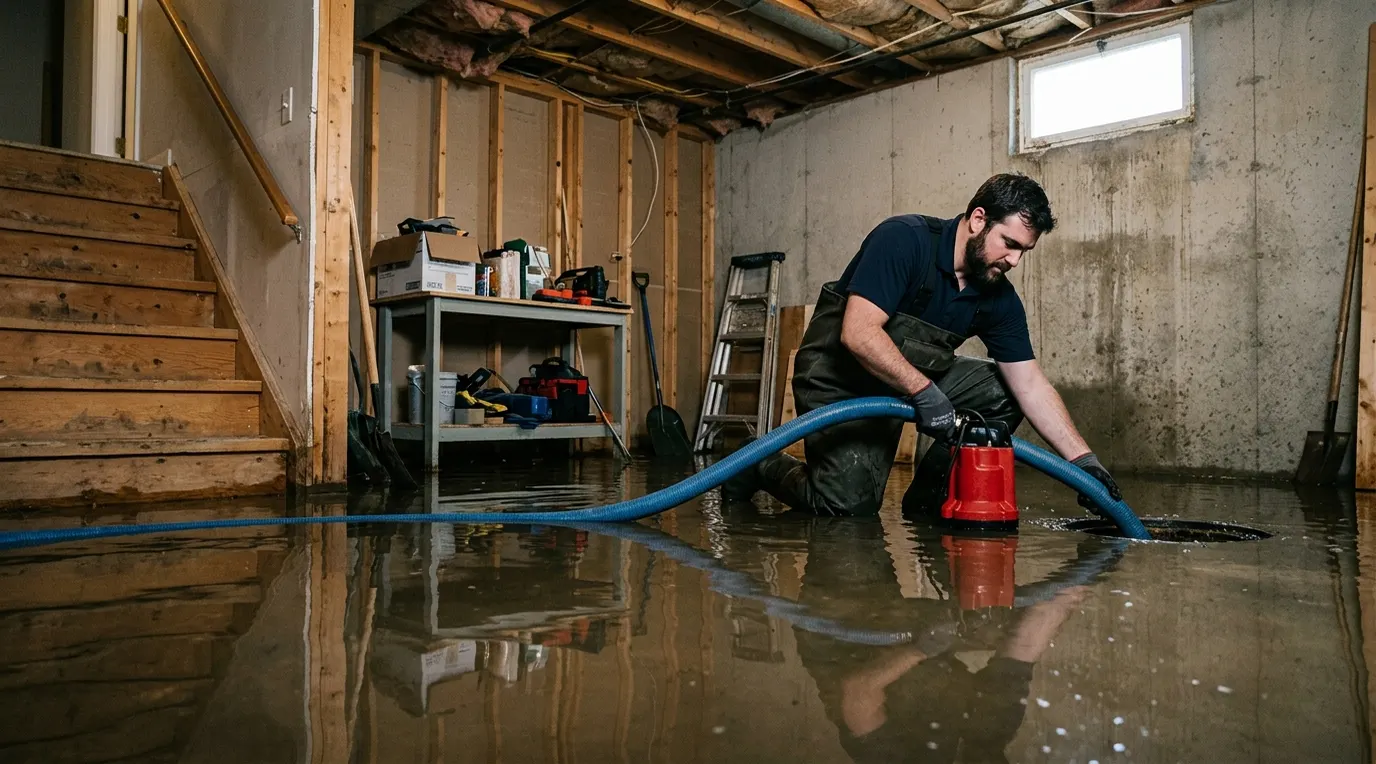
Emergency Basement Flooding Cleanup in Macomb
Emergency basement flooding cleanup in Macomb and surrounding areas. Insurance billing accepted. Call (586) 580-0197.
Flooded basement in Macomb? Call now for emergency service. Our crew responds fast to pump out the water and start drying.
Standing water in a basement does not wait. Within the first hour, it seeps behind drywall, soaks into wall framing, and begins saturating the concrete slab beneath any flooring you have down. Within 24 to 48 hours, conditions are right for mold colonization. Basement flooding cleanup in Macomb is time-sensitive in a way that a slow drip from a supply line simply is not, and the response has to match that urgency from the moment the water is found.
What basement flooding cleanup actually involves
Flooded basement cleanup is not just pumping water out and running a fan. The visible water is only part of the problem. Concrete block and poured-concrete foundations absorb moisture through their full depth. Fiberglass batt insulation between studs holds water like a sponge while the paper facing stays dry to the touch. Engineered wood subfloor panels swell and delaminate from below while the surface looks intact. A proper wet basement restoration job addresses all of it, not just what you can see.
The equipment involved reflects that complexity. Truck-mounted or portable extractors pull standing water fast. Desiccant or refrigerant dehumidifiers run continuously to drop the vapor pressure in the air so moisture moves out of materials rather than deeper into them. Air movers are positioned at floor level and angled into wall cavities to accelerate evaporation where it matters. Thermal imaging cameras and penetrating moisture meters track what is happening inside walls and under slabs, not just at the surface.
Timeline depends on water category and how long the water sat. Clean water from a sump failure or heavy rain intrusion typically dries in three to five days under active drying conditions. Water that has been sitting longer, or that carries soil and debris from a drain backup, takes longer and requires additional steps.
Our process
-
Inspection and water classification. Before any equipment goes in, the source and category of water are confirmed. Clean rainwater intrusion through a window well is handled differently than a floor drain backup carrying sewage. Category 3 water (sewage or heavily contaminated groundwater) requires containment protocols and personal protective equipment before extraction begins.
-
Extraction. High-capacity extractors remove standing water first. For significant flooding, this step alone can take one to several hours. Weighted extraction wands are used on carpet and padding to pull water from the substrate before any decision is made about whether materials can be saved.
-
Material assessment and selective demolition. Wet drywall below the flood line, saturated insulation, and compromised flooring materials are documented and removed when necessary. This is not aggressive demolition for its own sake. It is targeted removal of materials that cannot be dried in place and that would otherwise trap moisture and feed mold growth behind finished surfaces.
-
Structural drying with daily monitoring. Dehumidifiers and air movers run in a calculated configuration based on the cubic footage of the space and the readings from moisture meters. Readings are logged daily. Equipment is adjusted or repositioned as materials dry. Drying is not complete until readings return to regional equilibrium moisture content, not just when the space feels dry.
-
Post-drying documentation. Final moisture readings are recorded across all affected materials and documented for the insurance file. This record is what an adjuster needs to close the claim and what protects you if a mold issue surfaces later.
What separates a good basement flooding response from a bad one
The most common failure in basement water removal is calling the job done before the structure is actually dry. A dehumidifier running for two days in a finished basement with wet framing inside the walls will not dry those walls. Air movers need to be directed into cavities, and in some cases small openings need to be made in drywall to allow airflow to reach the framing. Operators who skip this step leave moisture trapped where it cannot be seen.
A second common problem is misclassifying the water source. Groundwater that has moved through soil and entered through a crack in the foundation wall is not the same as clean rainwater that came through an open window. The contamination level affects how materials are handled, what PPE is required, and what the insurance carrier will expect to see documented.
Insurance adjusters reviewing a basement water damage claim look for a moisture log showing daily readings, a clear record of what was removed and why, and drying completion documentation. A claim without that paper trail is harder to close and easier to dispute.
What does basement flooding cleanup cost?
Typical costs for flooded basement cleanup vary significantly based on the size of the space, the water category, how long the water sat, and whether finished materials need to come out. Most homeowners pay somewhere in the ranges below, which reflect industry-typical figures and are not quotes from Flood Solutions inc. Every loss is different, and Flood Solutions inc provides a written scope of work before any work begins. Homeowners insurance typically covers sudden and accidental water intrusion (a sump pump failure during a storm, a burst pipe) but generally excludes gradual seepage or maintenance-related flooding, so confirming your policy language early matters.
| Scenario | Typical industry range |
|---|---|
| Small unfinished basement, clean water, caught quickly | $1,200 - $3,000 |
| Mid-size finished basement, clean water, standard drying | $3,000 - $7,000 |
| Large finished basement, extended saturation | $6,000 - $14,000 |
| Any size, Category 2 water (gray water) | Add $1,000 - $3,000 to above |
| Category 3 water (sewage backup or contaminated groundwater) | $4,500 - $15,000+ |
| Selective demolition and material removal included | Varies; typically adds $800 - $3,500 |
Seasonal and regional considerations
Macomb County sits in a freeze-thaw zone that creates specific basement flooding patterns. Spring snowmelt combined with saturated clay-heavy soils puts sustained hydrostatic pressure on foundation walls and floor slabs from late February through April most years. Sump pumps that have sat idle all winter are most likely to fail exactly when they are needed most. Summer thunderstorms, which can drop several inches of rain in a short window, overwhelm window wells and older drain tile systems in neighborhoods built before current grading standards. Homes in Macomb built in the 1960s through 1980s frequently have clay tile drain systems that have cracked or collapsed with age, making them more vulnerable to repeated intrusion. If your basement has flooded more than once, the drain tile system is worth investigating.
Service area
Flood Solutions inc serves Macomb and the surrounding communities throughout Macomb County, including Sterling Heights, Clinton Township, Shelby Township, Chesterfield, and Warren. The service-area pages for each city link back here for the full technical detail on what basement water damage restoration actually involves.
If you are standing in a wet basement right now, call Flood Solutions inc at (586) 580-0197 to schedule your moisture assessment and get a written scope before any work begins.
Services We Handle
- Basement Water Damage Cleanup
- Basements Flood
- Sump Pump Failures
Frequently Asked Questions
Does homeowners insurance cover basement flooding cleanup?
How long does it take to dry out a flooded basement?
My basement floor drain backed up. Is that treated differently than rainwater coming in through a window well?
Do I need to remove drywall to dry out my basement walls?
What should I do while waiting for the cleanup crew to arrive?
Looking for the best basement flooding cleanup company in Macomb?
Flood Solutions inc provides basement flooding cleanup in Macomb, MI and the surrounding area, and has served local property owners since 1996. Customers rate us 4.4 out of 5 stars across 35 Google reviews. We answer calls 24/7 — call (586) 580-0197 for immediate help.
Need Basement Flooding Cleanup now?
We respond 24/7 across Macomb and surrounding MI cities.
Related Coverage
- Our Restoration Services
- Contact Flood & Fire Solutions
- Emergency Basement Flooding Cleanup in Chesterfield
- Emergency Basement Flooding Cleanup in Clinton Township
- Emergency Basement Flooding Cleanup in Rochester Hills
- Emergency Basement Flooding Cleanup in Shelby Township
- Emergency Basement Flooding Cleanup in Sterling Heights
- Emergency Basement Flooding Cleanup in Troy
- Emergency Basement Flooding Cleanup in Utica
- Emergency Basement Flooding Cleanup in Warren