
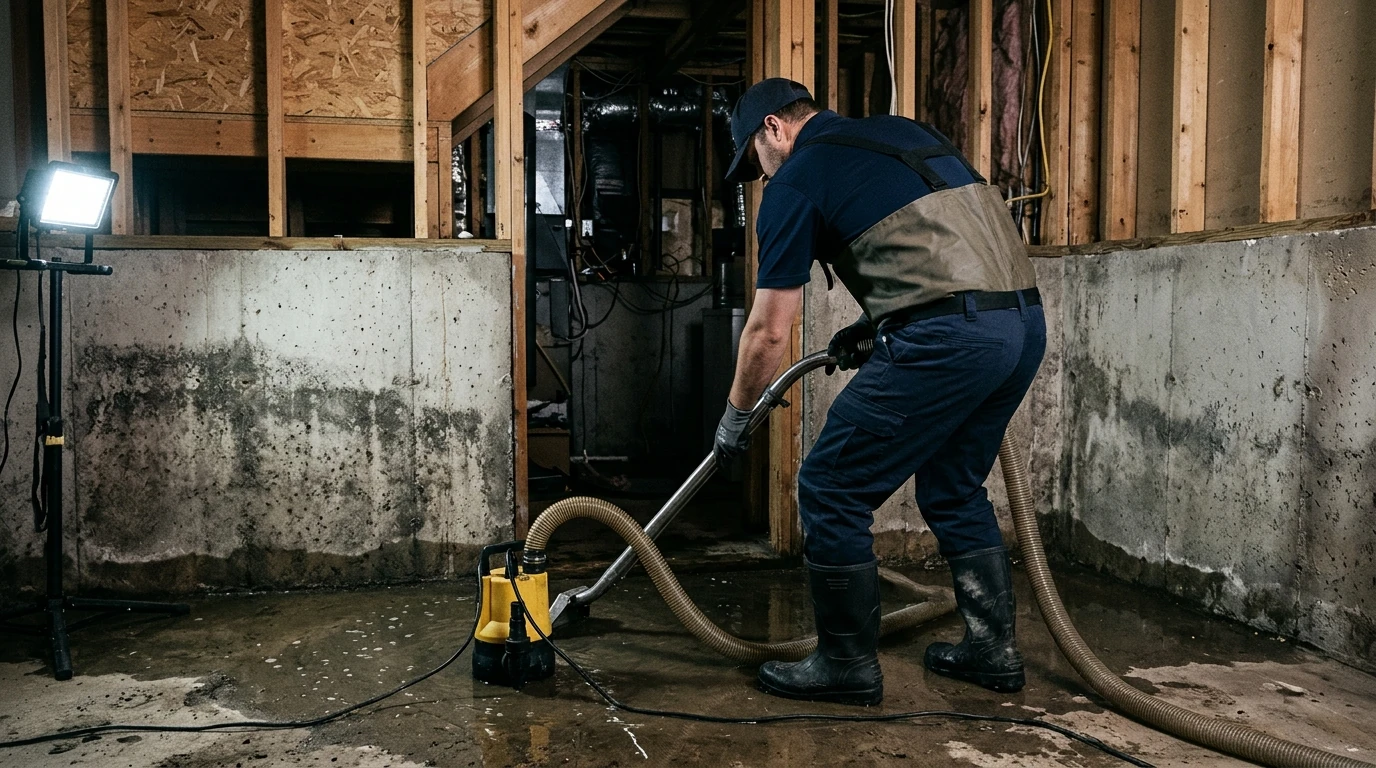
TL;DR: Flooded basement cleanup in Sterling Heights, MI typically costs between $1,500 and $15,000 or more. Clean water in a small, unfinished area sits at the low end. A sewage backup in a finished basement with drywall and flooring removal sits at the high end. The water category, the square footage affected, and how long drying equipment has to run are the three biggest cost drivers.
If you just found standing water in your basement after a heavy rain or a failed sump pump, you’re probably trying to figure out two things fast: how bad this is going to get, and what it’s going to cost before insurance (if it applies) kicks in. Here’s how Sterling Heights homeowners can realistically size that up, and where the number actually comes from.
How much does flooded basement cleanup cost in Sterling Heights, MI?
Most flooded basement cleanups in the Sterling Heights area run from $1,500 for a small, clean-water spot to $15,000 or more for a full sewage backup in a finished space. The spread is wide because “flooded basement” covers very different jobs.
| Scenario | Typical Cost Range |
|---|---|
| Clean water, small area (under 300 sq ft), minimal contents | $1,500 - $4,000 |
| Clean water, full unfinished basement, carpet/pad removal | $3,000 - $7,000 |
| Gray water (appliance discharge, groundwater seepage), moderate spread | $4,500 - $9,000 |
| Category 3 black water / sewage backup, any size | $7,000 - $15,000+ |
| Finished basement: drywall, flooring, insulation removal | add $2,000 - $6,000 |
| Extended drying (4+ days of equipment on site) | add $500 - $1,500 |
These are typical industry ranges for Macomb County, not a quote. A written scope after an on-site assessment is the only reliable number for your specific basement.
What actually drives the price up or down?
Five factors decide where your job lands on that table: water category, square footage and depth, finished versus unfinished, drying time, and demo/disposal volume.
Water category matters more than almost anything else. Clean water (Category 1), from a supply line or water heater, is the cheapest to remediate because materials can often be dried in place. Gray water (Category 2), like washing machine discharge or groundwater pushing through the foundation under hydrostatic pressure, usually means more porous material comes out. Black water (Category 3), which includes any sewer or drain backup from beyond the trap, sewage, and flood water from outside the home, requires antimicrobial treatment, full PPE for the crew, and far more material removed rather than dried. The ANSI/IICRC S500 standard defines these categories and the industry still uses it to scope a job.
Square footage and water depth set the baseline labor and equipment count. A basement with 2 inches of standing water across 800 square feet needs more extraction time, more air movers, and a bigger dehumidifier than a damp corner behind a water heater.
Finished basements cost more because carpet, pad, baseboard, drywall (usually cut 12-24 inches above the waterline), and sometimes insulation have to come out and go to disposal. Unfinished basements with a concrete floor and open framing dry faster and cheaper.
Drying time adds up daily. Equipment (air movers, LGR dehumidifiers) is typically billed per day, and a job that needs 3-5 days to hit dry-standard costs more than one that clears in 48 hours. If you want a general sense of what comparable Macomb-area jobs run, the water damage restoration cost guide for Macomb breaks down per-square-foot ranges across water damage types generally.
Will homeowners insurance cover a flooded basement in Sterling Heights?
It depends entirely on what caused the water, not on the fact that your basement flooded. A standard homeowners policy typically covers sudden, accidental water from inside the home, like a burst supply line, but excludes flood water and often excludes sump pump failure and sewer backups unless you added a specific endorsement.
Here’s where that split usually falls:
- Usually covered: a pipe that suddenly bursts, a water heater that fails, a washing machine hose that lets go.
- Usually NOT covered without an added endorsement: a sump pump that overflows or fails, and any sewer or drain backup. Both need a water backup (sewer/sump) endorsement on top of your standard policy.
- Usually NOT covered by homeowners insurance at all: water that enters from outside through the foundation, including rising groundwater and surface water from heavy rain, often called seepage or flooding. That requires a separate flood policy through the National Flood Insurance Program or a private flood carrier.
Coverage language varies by insurer and by policy, so this isn’t a guarantee of what your specific plan pays. For the general rules on what a standard policy does and doesn’t include, the Insurance Information Institute’s guide to homeowners coverage is a reliable plain-English source, and our own breakdown of what homeowners insurance covers for water damage walks through it in more depth. Whatever the cause, document everything with photos before cleanup starts and keep every receipt: insurers expect homeowners to mitigate the loss promptly, and that documentation protects the claim either way.
What does the cleanup process actually involve, and who should you call?
A flooded basement cleanup moves through extraction, moisture mapping, controlled drying, targeted demo, and documentation, usually in that order over 2 to 5 days depending on the water category and square footage.
- Water extraction. Standing water is pumped or vacuumed out first, often within the first hour or two of arrival.
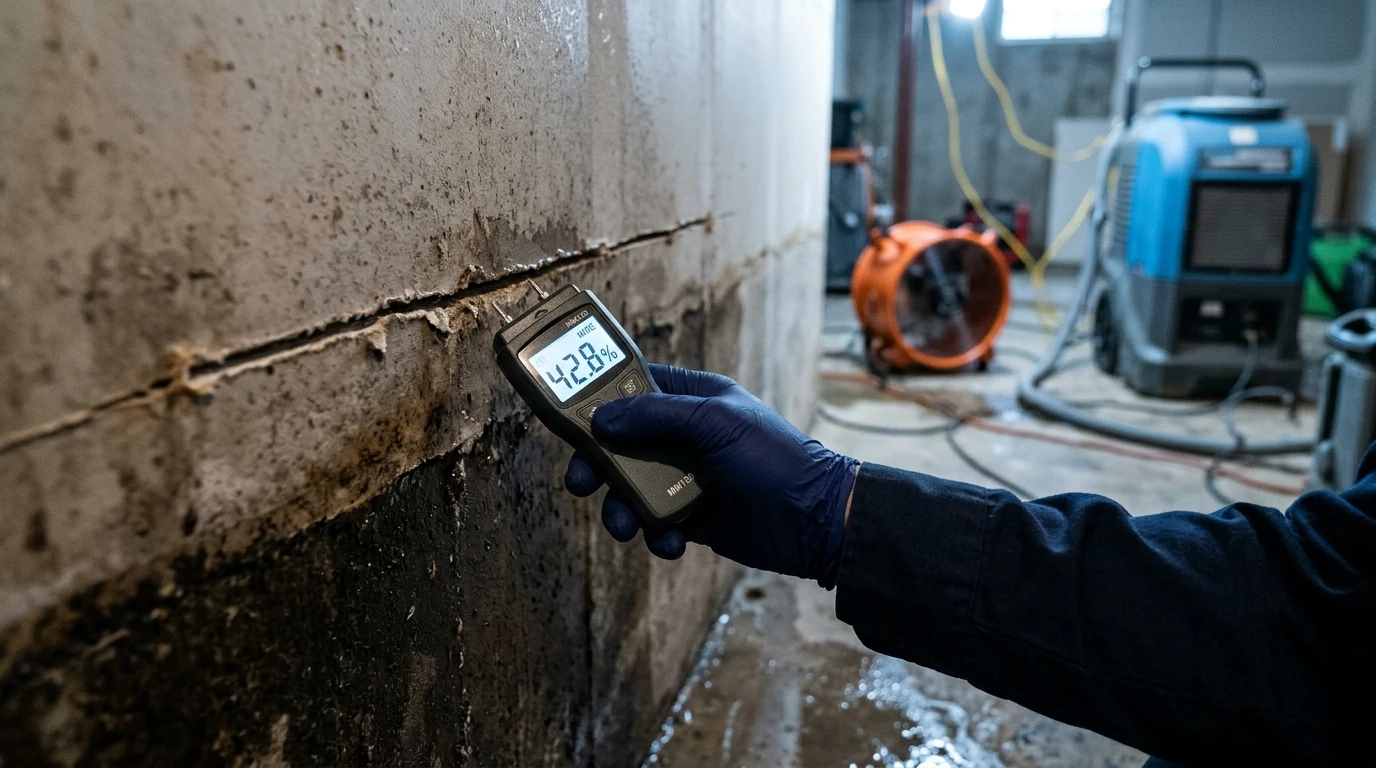
- Moisture mapping. A moisture meter checks drywall, framing, and flooring to find exactly how far the water traveled, including behind walls where it isn’t visible.
- Category-appropriate treatment. Clean water areas get dried in place where possible. Category 2 and 3 losses typically have affected porous materials (carpet, pad, drywall, insulation) removed, plus antimicrobial treatment for anything contaminated.
- Structural drying. Air movers and dehumidifiers run until the space hits a dry standard, verified with follow-up moisture readings, not a guess.
- Documentation. Photos, moisture logs, and a written scope go to you and, if applicable, your insurance adjuster.
In Sterling Heights, Flood and Fire Solutions handles water extraction, structural drying, and sewage cleanup around the clock and documents the loss from the first visit, which matters whether or not your specific cause ends up being covered. If the water involves any sewage, standing water over 24 hours old, or an unknown source, treat it as a job for a professional rather than a wet-vac and fans: Category 2 and 3 water carry contamination risks that aren’t worth guessing on.
If your basement is wet right now, the fastest way to control the cost is to stop the water source if it’s safe to do so, then get extraction started before 24-48 hours pass, since that’s roughly the window where mold can begin growing on wet materials.
Getting a written scope before work starts is the one thing that keeps a flooded basement job from becoming a cost surprise, no matter which company handles it. Call (586) 580-0197 to schedule an on-site assessment in Sterling Heights.
About Flood and Fire Solutions
The company has served Macomb County, Michigan since 1996, including Sterling Heights, Warren, and Clinton Township. It is licensed and insured, answers calls 24/7, and handles water cleanup, water damage restoration, sewage cleanup, ice dam damage, and fire damage restoration across the region. Locally owned and operated, it has built a 4.5-star Google rating from local customers over nearly three decades in the business.