
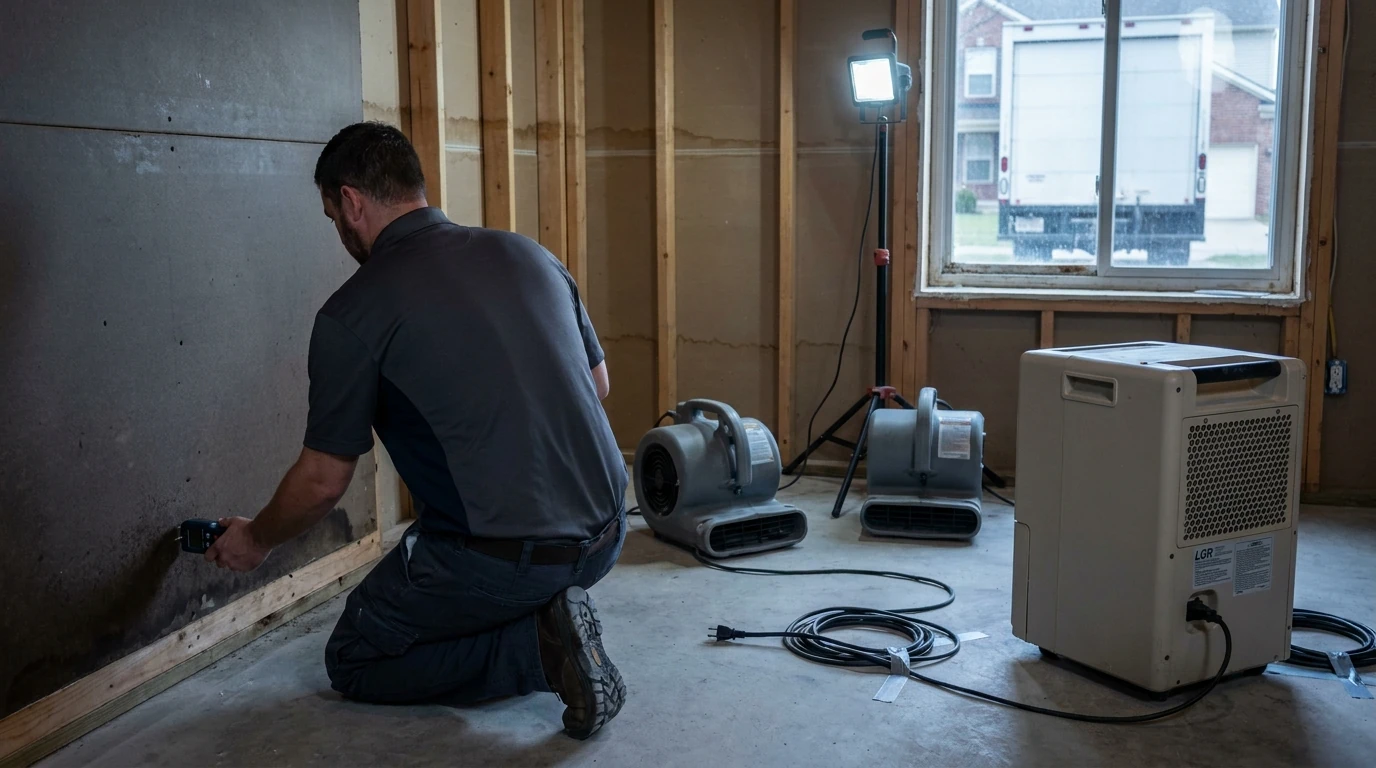
If water is spreading across your Macomb basement floor or dripping through a ceiling right now, call Flood Solutions inc at (586) 580-0197 for water damage restoration. The company answers 24/7, has worked in Macomb County since 1996, and carries a 4.4-star Google rating across 35 reviews. Its crews dry structures to the drying and documentation benchmarks set in the ANSI/S500 standard, the industry reference for professional water damage restoration.
But not every water emergency starts with that call. Sometimes the first call needs to be a plumber, the gas company, or 911. Here’s how to sort that out fast, because the order of calls affects both how much damage spreads and how smoothly your insurance claim goes.
Should I call a plumber or a restoration company first?
Call a plumber first only if water is still actively flowing and you cannot find or close the shutoff valve yourself; call a restoration company once the source is stopped, or in parallel if you need both at the same time.
A plumber’s job is stopping the water: a split supply line, a failed water heater fitting, a cracked drain stack. A restoration company’s job is everything after that: pulling standing water out of carpet and subfloor, pulling moisture out of drywall and framing, and documenting the loss for your insurer. If a sump pump failure or a burst pipe has already flooded a Macomb basement and the source is off, you don’t need a plumber on-site to start extraction. Many homeowners in Sterling Heights, Clinton Township, and Macomb end up calling both the same afternoon: a plumber for the repair, a restoration crew running simultaneously so drywall and subfloor don’t sit wet for another six hours. Our related post on what to do in the first 24 hours after water damage walks through that timeline in more detail.
Is this a gas, electrical, or utility emergency instead?
If water is near an electrical panel, outlets are submerged, or you smell gas, leave the house and call 911 or your utility company before calling anyone else.
Water and live electrical components don’t mix, and a water heater or furnace flood can also mean a gas leak. Ready.gov’s flood safety guidance is blunt about this: don’t walk through standing water near outlets, and don’t re-enter a flooded space until the power and gas have been confirmed safe. Once the utility or fire department clears the scene, that’s when the restoration call makes sense, not before. This comes up most often in Macomb homes after a sump pump failure floods a finished basement where the electrical panel sits low on the wall.
What happens after you call a water damage restoration company?
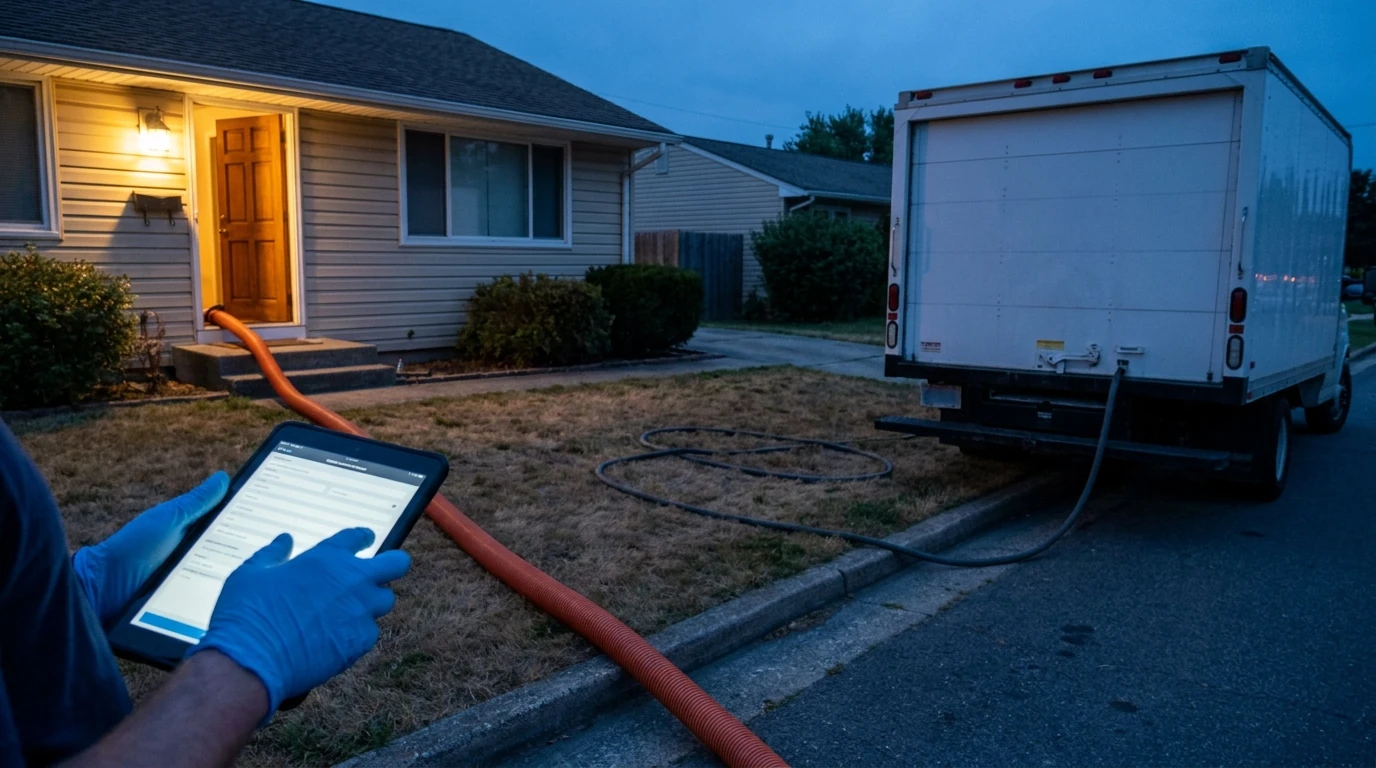
A dispatcher asks what’s flooding, where in the home, and whether the source is stopped, then sends a crew to begin extraction, set containment, and photograph the damage for your insurance file.
Have a few things ready before the crew arrives: your insurance company’s name and policy number, the approximate time the water started, and whether the source has actually been shut off. On-site, the first hour is usually extraction (pulling standing water with truck-mounted or portable pumps), moisture mapping with a meter to find how far water traveled into walls and subfloor, and setting air movers and a dehumidifier to begin structural drying. That documentation matters for the claim: most insurers want to see dated photos and moisture readings, not just a verbal description of what happened. If you haven’t already, our guide on what a flooded Macomb basement needs in the first hours covers the homeowner side of that same timeline.
Should I call my insurance company or the restoration company first?
Call the restoration company first to stop the damage from spreading, then call your insurer once mitigation is underway; most policies expect you to limit further loss right away, not wait for a claims adjuster to show up.
Standard homeowners policies generally cover sudden, accidental water damage, like a burst pipe or failed appliance line, while excluding damage from long-term neglect. The Insurance Information Institute’s guide to settling claims after a disaster notes that documentation from the start of the loss strengthens a claim considerably. A restoration crew’s moisture logs and extraction records become part of that paper trail. For the coverage specifics, our post on whether homeowners insurance covers water damage breaks down what typically gets paid and what doesn’t.
Water damage doesn’t wait for business hours, and in a Macomb basement it rarely stays contained to one room. The sooner extraction and drying start, the less likely the job turns into a drywall and subfloor replacement instead of a straightforward dry-out. Visit the Flood Solutions inc homepage for more on how the company works, or request a water damage restoration assessment to get a crew moving.