
TL;DR: If your basement just flooded, don’t step into the water until the power to that area is confirmed off. Figure out whether the source is groundwater seepage, a failed sump pump, or a sewer/floor-drain backup, since each one changes how you clean up and what your insurance will pay. Photograph everything before you move it, then start extraction and drying immediately. Standing water that sits past 24-48 hours in a Macomb County basement is how a cleanup job turns into a mold job.
You went downstairs and found standing water across the floor, maybe an inch, maybe six. Whether it came in through a basement wall during a hard fall rain, backed up through a floor drain, or showed up because the sump pump quit overnight, the next half hour matters more than anything else you’ll do about this flood. Here’s the order of operations, in plain terms, for a Macomb-area basement specifically (not a general water-damage checklist).
What do I do in the first 30 minutes after finding a flooded basement?
Do not walk into standing water in a basement until you know the power to that area is off. Water and electrical panels, outlets, or a plugged-in sump pump are a serious shock risk, and Macomb County basements commonly have the electrical panel mounted at or near floor level.
If you can reach the breaker panel without crossing water, shut off power to the basement circuits. If the panel itself is sitting in water or you’re not sure, don’t touch it. Call your utility (DTE Energy or your local provider) to cut power at the meter instead.
Next, check for a sewage smell. A rotten-egg or sewage odor with the standing water usually means a floor-drain or sewer backup, also called Category 3 water, which carries bacteria and should be treated as a health hazard, not just a mess. Keep kids and pets out and skip the shop-vac until you’ve read the next section. If the water is more than a couple of inches deep or has been sitting more than a few hours, this is a job for professional water damage restoration rather than a solo weekend project.
What’s actually causing the water, and why does it matter?
The source of the water determines both the health risk and what your insurance will pay, so identify it before you start cleaning. There are three usual suspects in a Macomb County basement.
Groundwater seepage comes in through a crack in the foundation wall or the cove joint where the wall meets the floor, usually after heavy rain or snowmelt raises the water table. Macomb County sits largely within the Clinton River watershed on clay-heavy soil, which drains slowly and pushes groundwater against foundation walls during wet stretches. This water is typically Category 1 (relatively clean) if it hasn’t picked up contaminants.
Sump pump failure means the perimeter drain tile did its job, but the pump that’s supposed to eject that water outside didn’t, often from a power outage, a stuck float switch, or a pump that simply wore out. Our guide on what causes basement flooding in Michigan covers the mechanics in more detail, and our piece on whether insurance covers sump pump failure in Macomb is worth reading before you file anything, because most standard homeowners policies exclude this unless you added a specific endorsement.
Sewer or floor-drain backup is the one that smells bad and needs the most caution. It’s Category 3 water under the IICRC S500 standard, meaning it’s treated as contaminated regardless of how it looks. This usually requires professional extraction and disposal of anything porous it touched.
How do I get the water out and dry the basement?
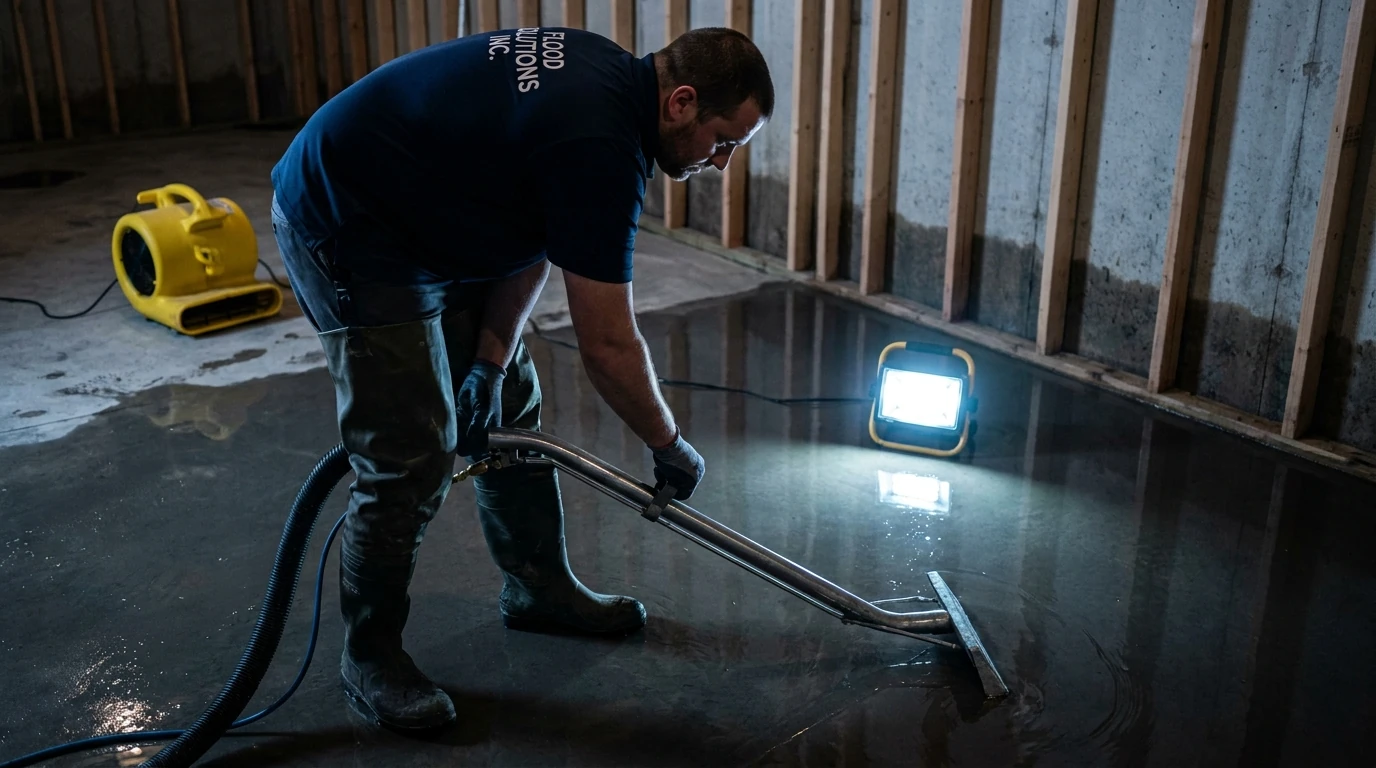
Start extraction as soon as it’s safe, because drying speed is what determines whether this stays a cleanup job or becomes a mold remediation job. For an inch or less of clean water, a wet/dry shop vac can handle it. For anything deeper, or for Category 2/3 water, extraction equipment or a sump pump doing double duty is faster and safer.
Once the standing water is out, pull up anything still wet that’s sitting on the floor, boxes, rugs, furniture legs, and get air moving. Open windows if the weather allows, and set up fans and a dehumidifier aimed at the wettest areas. The EPA’s mold guidance recommends getting materials dry within 24 to 48 hours specifically because mold can begin colonizing wet drywall and framing in that window.
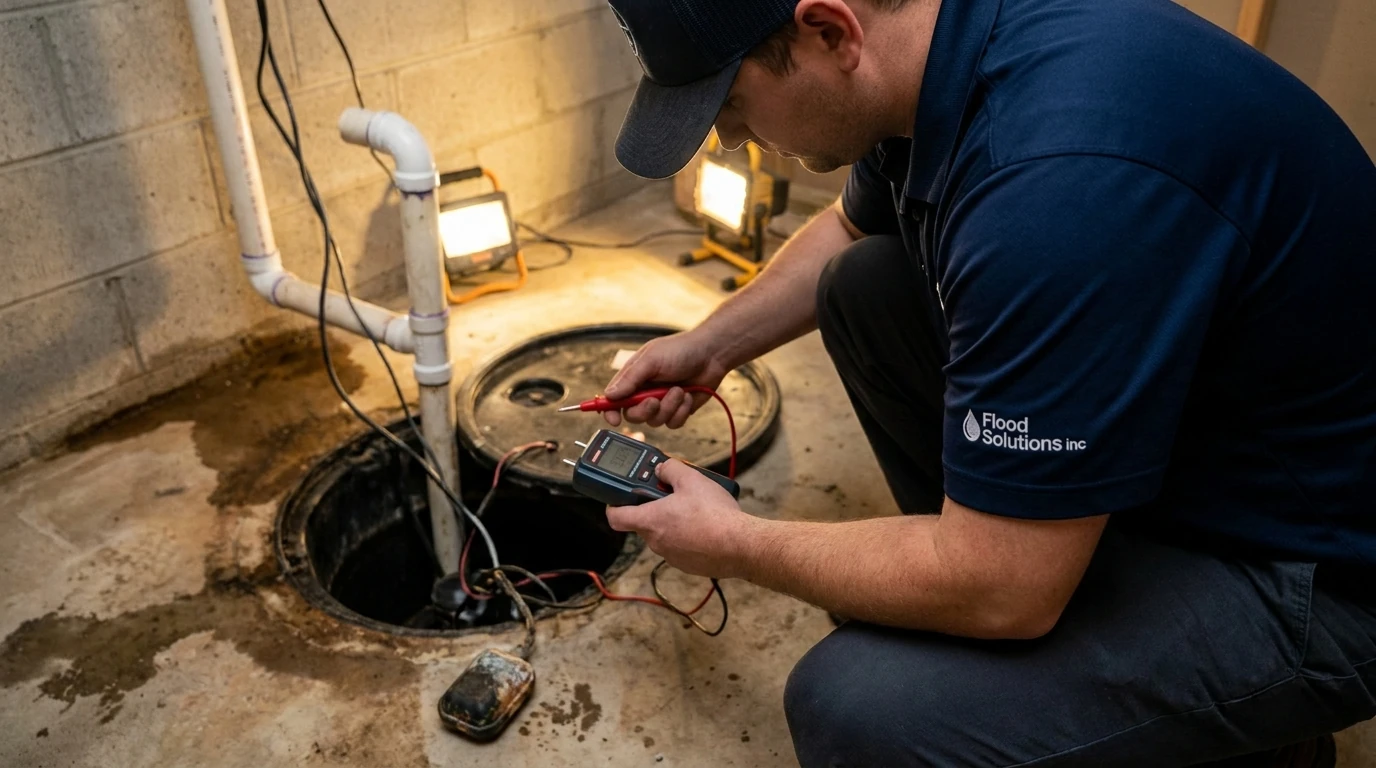
For a typical residential basement, full structural drying with commercial-grade air movers and dehumidifiers runs 3 to 5 days, monitored daily with a moisture meter against the drywall and framing until readings return to normal. A box fan and a dehumidifier from the hardware store can slow mold growth, but they usually can’t pull enough moisture out of wet framing and insulation fast enough on their own, which is why a flooded basement that’s been fully dry-to-the-touch for a day can still be wet inside the wall cavity.
What should I throw away after a basement flood?
Anything porous that was touched by Category 2 or 3 water should be discarded, not cleaned, because bacteria and contaminants soak into the material faster than you can sanitize it back out. That includes wet carpet padding, drywall that’s wicked water up the wall (cut it out 12 to 18 inches above the visible waterline, since drywall draws moisture higher than it looks), fiberglass insulation, particle-board furniture, and cardboard.
For clean groundwater that’s Category 1 and dried within that 24-48 hour window, more items are salvageable: solid wood furniture, non-porous flooring, and some carpet if it’s extracted and dried quickly enough. When in doubt about whether something is safe to keep, the cost of replacing a box of stored items is almost always less than the cost of a mold problem six weeks later.
What do I need to document before cleanup starts, for insurance?
Photograph and video the damage before you move or discard anything, including wide shots of the whole basement and close-ups of the water source itself (the crack, the failed pump, the floor drain). Insurance adjusters work from documentation, and a clear before-cleanup record is the single biggest factor in how smoothly a claim goes.
Know that most standard Michigan homeowners policies do not automatically cover basement flooding. Groundwater seepage and sewer backup typically require a separate endorsement, and claims are frequently denied or reduced without one. Our full breakdown on whether homeowners insurance covers water damage walks through what’s usually included versus excluded. If you have questions about your specific policy language, Michigan’s Department of Insurance and Financial Services (DIFS) and the Michigan Department of Health and Human Services flood guidance are both reliable state resources for homeowners sorting through a flood claim.
When is a flooded basement a job for a professional restoration company?
Call a restoration company once the water is Category 2 or 3, covers more than roughly 10 square feet, or hasn’t been fully extracted and drying within the first 24 hours, since those are the thresholds where DIY equipment typically can’t keep up. A finished basement with drywall, flooring, and insulation raises the stakes further, because moisture hides inside the wall assembly even after the surface looks dry.
Flood Solutions inc has handled basement flooding across Macomb, Sterling Heights, Clinton Township, and the surrounding area since 1996, and runs a 24/7 line for exactly this situation. Our water cleanup team extracts, maps moisture with meters (not guesswork), and documents the loss for your adjuster as part of the job. For the broader first-day checklist beyond basements specifically, our first 24 hours after water damage guide covers the rest of the house.
A flooded basement is unpleasant, but it’s also one of the more predictable restoration jobs once you know the source and move fast on drying. Get the power safe, identify the water, document it, and start drying within hours rather than days.
Call Flood Solutions inc at (586) 580-0197 for a basement water extraction and drying assessment, day or night.
About Flood Solutions inc
Flood Solutions inc is a licensed and insured restoration company based in Ira, Michigan, serving Macomb, Sterling Heights, Warren, Clinton Township, Troy, and the surrounding area since 1996. Their crews handle water damage restoration, water cleanup, sewage cleanup, emergency water removal, and emergency board-up for homeowners dealing with basement flooding, burst pipes, and storm damage, with a 24/7 response line for active water emergencies.