
TL;DR: Michigan basements flood for four overlapping reasons: heavy clay soil that won’t absorb water and pushes it toward foundations, combined storm and sanitary sewers in older Macomb County neighborhoods that back up during heavy rain, sump pumps that fail right when storms knock out power, and spring thaw water that can’t soak into ground that’s still frozen underneath. Most flooded basements are hit by two or three of these at once, not just one.
If your basement took on water during the last downpour, or you’re staring at a wet carpet after a spring melt and wondering why this keeps happening, you’re not imagining a pattern. Southeast Michigan’s geology and its aging sewer infrastructure work against basements in a specific, repeatable way. Understanding the actual cause matters because it changes what you fix first, and whether your homeowners policy is even likely to pay for it.
Why does clay soil make Michigan basements flood more than other states?
Macomb County sits on heavy clay soil left behind by glacial lake beds, and clay doesn’t drain. Water that would soak into sandy or loamy soil within hours can sit against a clay-bound foundation for days, building hydrostatic pressure against the walls and footing drains until it finds a crack, a cove joint, or a window well to get through.
That pressure is the reason so many Macomb, Sterling Heights, and Clinton Township homes see water seeping in along the base of the foundation wall rather than pouring through an obvious hole. The clay holds water right where your foundation lives, and grading or gutter problems that would be minor elsewhere become basement floods here.
Why does my basement flood when it rains hard in Macomb County?
Heavy rain floods basements in older Macomb County neighborhoods because many were built with combined sewer systems that carry stormwater and sewage in the same pipe, and a big enough downpour overwhelms that pipe. When the system surcharges, water has nowhere to go but back up through the lowest point in the house, usually a floor drain or basement toilet.
This is different from groundwater seeping through a wall. A sewer backup brings water that’s been mixed with wastewater, which the industry’s S500 water damage standard classifies as Category 3 water, the most contaminated category. It requires different handling than a clean-water seep, including discarding porous materials that absorbed it rather than trying to dry them.
Newer developments in Troy and Rochester Hills with separated storm and sanitary lines are less exposed to this specific failure mode, but they’re not immune to the next one.
Can a sump pump failure flood a basement even without a storm?
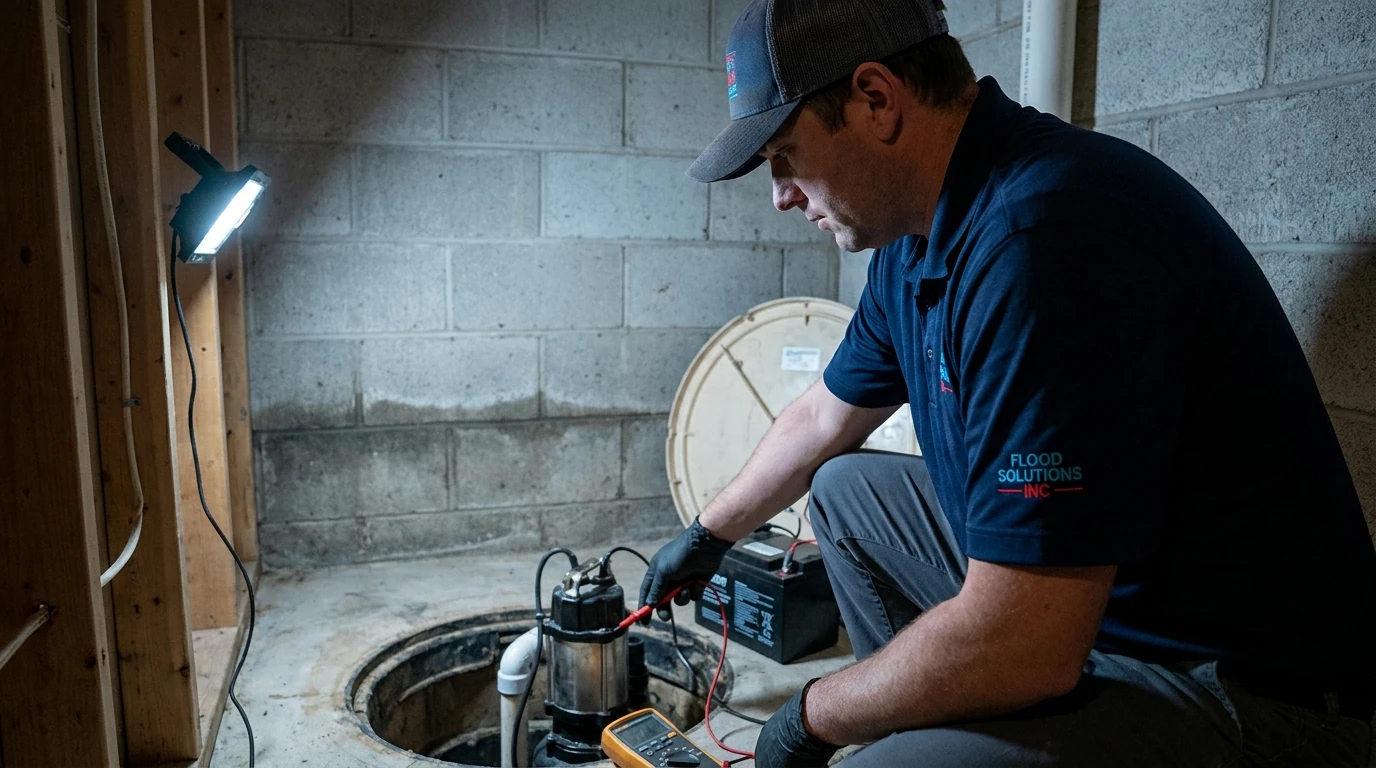
Yes, a sump pump can fail on a dry day from a jammed float switch, a worn-out motor, or a clogged discharge line, and groundwater that the pump would normally handle just accumulates until it overtops the pit. But the far more common failure happens during storms, when the same weather that’s pushing groundwater up is also knocking out the power that runs the pump.
That combination (rising water and a dead pump at the same moment) is why a battery backup or water-powered backup pump matters more in Macomb County than almost any single home improvement. A pump that only runs on grid power is a single point of failure exactly when the system is under the most stress.
If your sump pump has failed before, our sump pump insurance coverage breakdown walks through what most Michigan policies will and won’t pay for, since this is one of the more commonly denied claims homeowners run into.
Does spring thaw cause basement flooding even without rain?
Spring thaw floods basements because melting snow sits on top of ground that’s still frozen several inches down, so the water can’t soak in and instead runs straight toward the foundation. It’s effectively the same hydrostatic pressure problem as heavy rain, except it happens over days instead of hours and often catches homeowners off guard because there’s no storm to blame.
Macomb County typically sees this in a narrow window from late February through April, when daytime melt refreezes overnight and the ground thaws unevenly. Gutters still clogged with fall leaves make it worse, since melt that should run to the street instead sheets down right next to the foundation wall.
What should you do first if your basement is already flooding?
Cut power to the affected area at the breaker before you step into standing water, then call for extraction rather than waiting to see if it recedes on its own. Standing water in contact with drywall and insulation starts supporting mold growth within 24 to 48 hours, per guidance from the EPA, so the clock that matters most is the one before cleanup even starts.
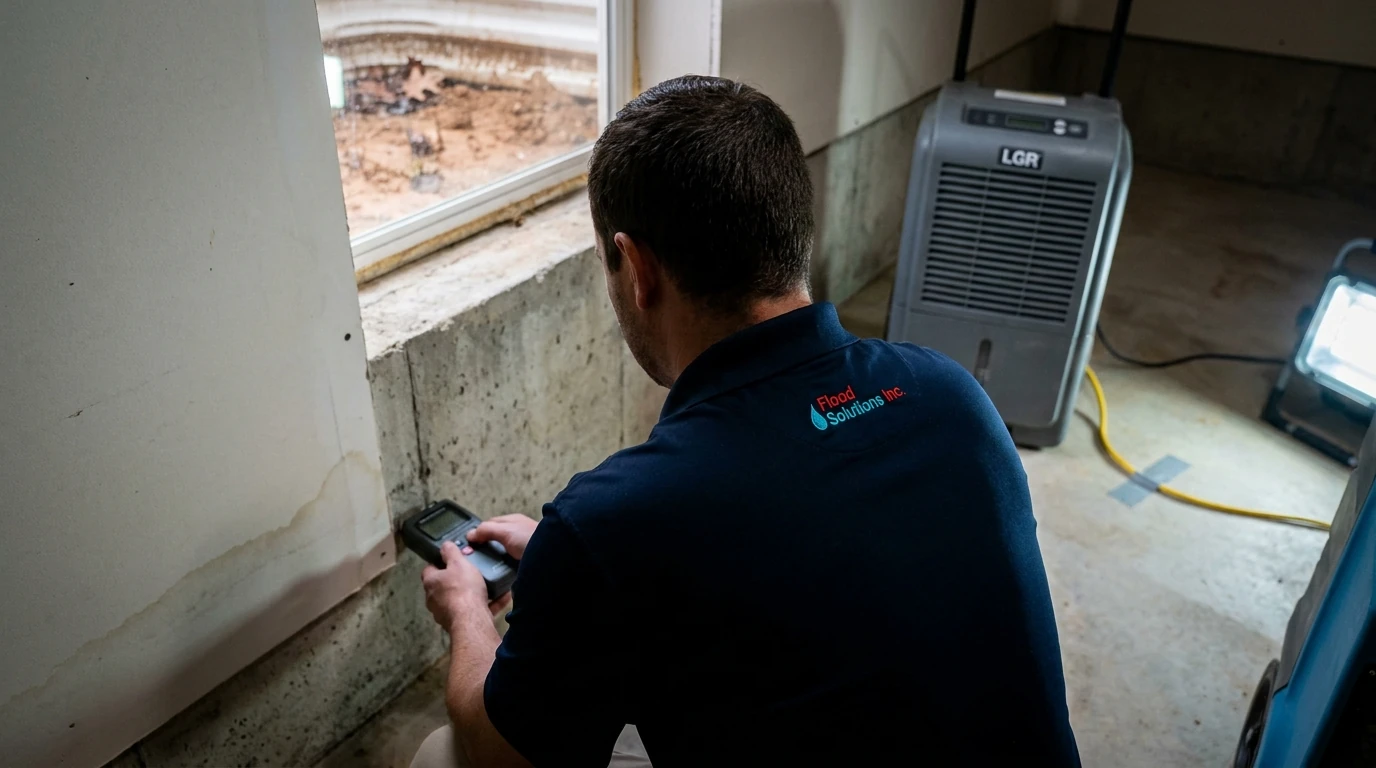
Document the water level with photos before anything is moved, note whether the water came from a visible storm backup versus a slow seep, and get a professional moisture reading on the wall cavities, not just the visible floor. That distinction between clean groundwater and Category 3 sewer backup also determines what your insurer will cover, which is worth sorting out with an adjuster early rather than after materials are already torn out.
For the mechanical side of prevention, our basement flooding prevention guide covers grading, gutter extensions, and backup pump options in more detail than makes sense to repeat here.
If your basement has already taken on water, Flood Solutions inc runs emergency water extraction and structural drying across Macomb, Sterling Heights, Warren, and Clinton Township, and documents the loss the way most Michigan insurers expect to see it.
About Flood Solutions inc
Flood Solutions inc has served Macomb County since 1996, handling water damage restoration, sewage cleanup, fire damage restoration, and related emergency services for homeowners across Macomb, Sterling Heights, Warren, Clinton Township, Troy, Rochester Hills, Shelby Township, Utica, and Chesterfield. The company is locally owned and operated, licensed and insured, and holds a 4.4 rating across 35 Google reviews. This post was prepared with the Flood Solutions inc team.
Need help now? Call Flood Solutions inc at (586) 580-0197.