In short: fire damage restoration cost in Macomb typically runs from about $2,500 for a contained stovetop fire up to $40,000 or more when smoke and heat reach the whole house. The final number depends on how far the smoke traveled, how much water the fire department used, and whether porous materials like drywall and insulation have to come out.
If you just put out a grease fire on the stovetop, or the fire crew knocked down flames that spread past the kitchen before you got your family and pets out safely, you’re probably staring at soot on the ceiling and a scorched cabinet, wondering what the cleanup bill looks like before you even call your adjuster. Macomb and the rest of Macomb County see a steady mix of kitchen fires, electrical fires in older ranch homes, and dryer-vent fires. The cost swings more than most homeowners expect, and most of that swing comes down to how far smoke and soot traveled, not just how big the flames got.
How Much Does Fire Damage Restoration Cost in Macomb?
Most Macomb County fire damage restoration jobs fall between $2,500 and $40,000, with structural losses running well past that. The table below reflects typical industry ranges for each damage level, not a quote: every loss gets its own written scope once a technician sees the property.
| Damage Level | Typical Cost Range |
|---|---|
| Contained appliance or stovetop fire (no spread) | $2,500 - $6,000 |
| Single room or kitchen fire with moderate smoke | $8,000 - $20,000 |
| Smoke and soot throughout the house, no structural burn | $15,000 - $35,000 |
| Structural fire damage to framing or multiple rooms | $40,000 - $100,000+ |
| Emergency board-up (per opening) | $200 - $500 |
| Contents pack-out and cleaning (per room) | $500 - $2,000 |
Smoke and soot cleaning alone typically runs $3 to $8 per square foot. When burned or water-soaked drywall, insulation, or flooring has to be removed, that figure climbs to $10 to $30+ per square foot because you’re paying for demolition, disposal, and antimicrobial treatment on top of the cleaning.
What Drives the Price: Smoke, Soot, Water, and Scope
The size of the fire itself is only one factor. What actually moves the price is how far smoke traveled, how much firefighting water soaked into the structure, and how many surfaces need odor treatment versus a simple wipe-down.
A few specific drivers:
- Smoke travel distance. Smoke rides HVAC ductwork and rises through stairwells, so a kitchen fire can leave soot staining two floors away even if the flames never left the stove.
- Water from the fire department. Hose lines used to knock down a fire often leave more water damage than the fire itself. That water gets categorized and dried the same way a burst pipe or appliance leak would be, following the ANSI/IICRC S500 standard.
- Material type. Porous materials like drywall, carpet pad, and insulation that absorbed heavy smoke usually get removed rather than deodorized, because soot works into the fibers.
- Odor treatment method. Light smoke often clears with HEPA air scrubbing and surface cleaning. Heavy odor penetration can require thermal fogging or an ozone treatment cycle, which adds cost and time.
- Square footage affected. A single-room fire with smoke confined by a closed door costs far less than the same fire with doors left open and HVAC running during the event.
Kitchen Fire vs. Whole-House Fire: What Changes
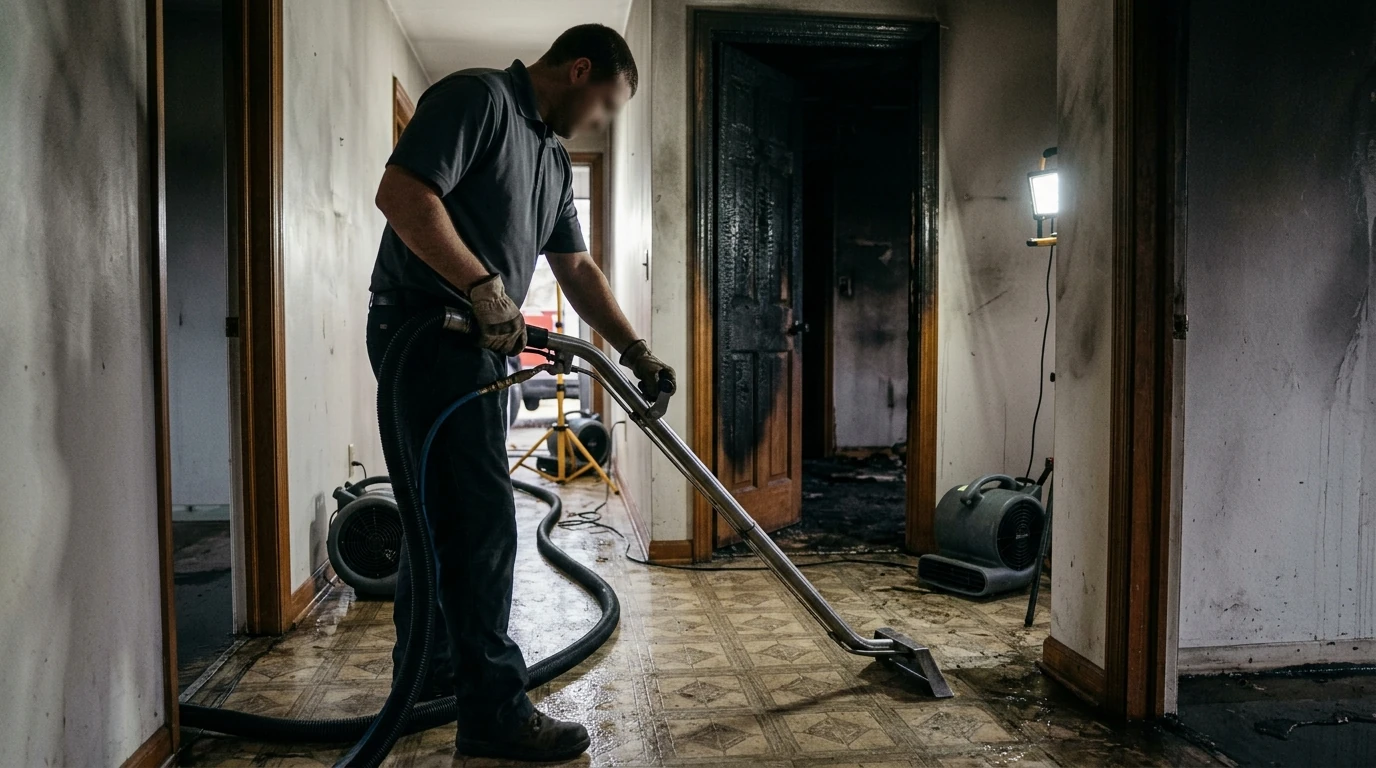
A kitchen fire usually means hard surfaces (cabinets, countertops, appliances) take the direct heat damage while smoke drifts into adjoining rooms. A whole-house fire means every porous surface in the home, carpet, drapes, upholstery, drywall, has absorbed smoke and needs evaluation.
A contained kitchen fire with scorched cabinets and smoke limited to the kitchen and an adjoining hallway typically lands in the $8,000 to $20,000 range once cabinet replacement, deep cleaning, and odor treatment are included. Content cleaning for kitchen items (dishes, small appliances, pantry goods) is billed separately and often runs $500 to $1,500 depending on volume.
When smoke travels through the whole house, the scope expands to every room: textiles get professionally cleaned or replaced, walls and ceilings throughout get wiped or sealed, and HVAC ductwork often needs cleaning since it circulated smoke through the system. That’s the jump from a single-room job to the $15,000 to $35,000+ range, even when no framing burned.
Does Insurance Pay for Fire Damage Restoration?
Most standard homeowners policies cover sudden, accidental fire damage, including the smoke and soot cleanup and the water damage from firefighting efforts. Coverage details vary by insurer and policy, so check your declarations page for your specific limits and deductible.
What typically gets covered: structural cleaning, soot and smoke remediation, odor treatment, and content cleaning or replacement tied directly to the fire event, per the Insurance Information Institute’s guidance on homeowners coverage. You can also review general consumer guidance through Michigan’s Department of Insurance and Financial Services.
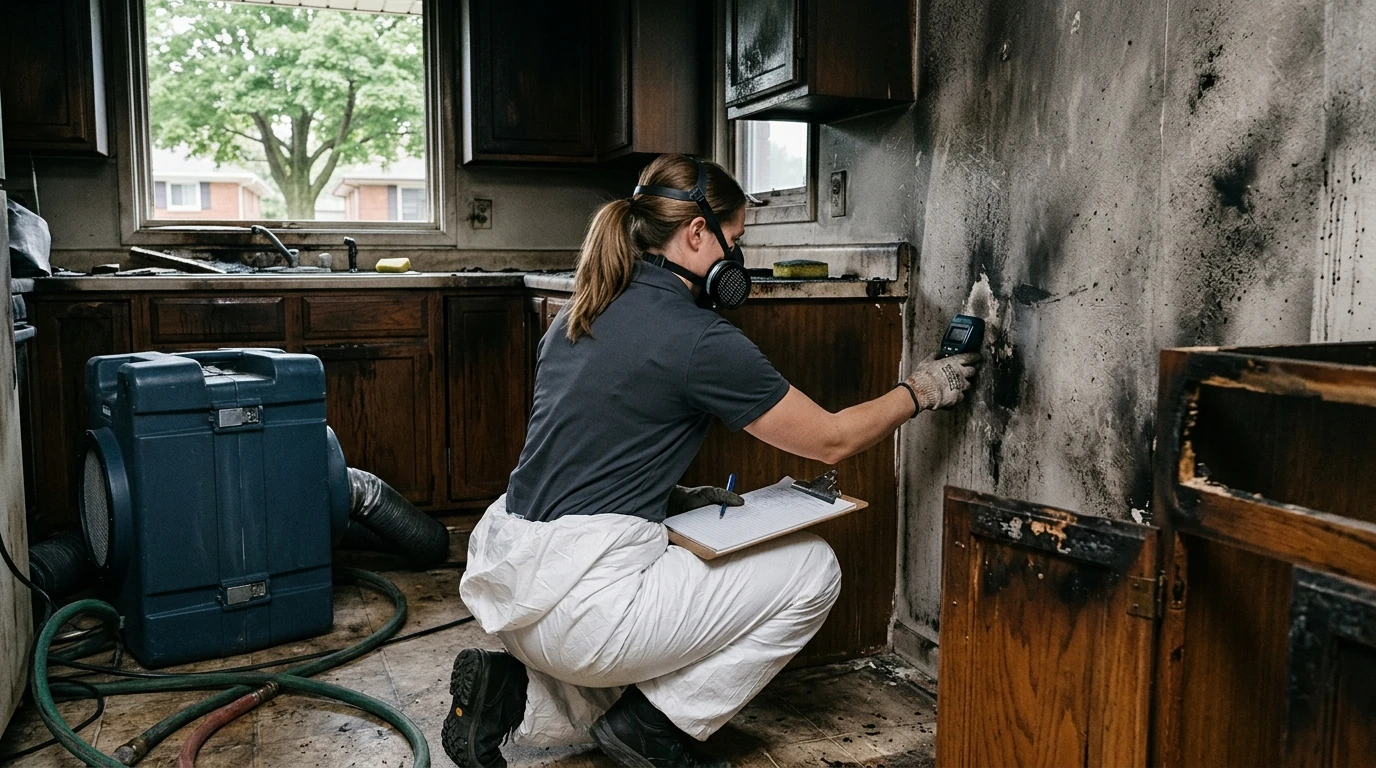
A written assessment from Flood and Fire Solutions documents pre-loss condition, moisture readings, and the scope of work for your adjuster, which is usually the single biggest factor in how smoothly a fire claim moves. Save receipts for any emergency costs (board-up, temporary lodging) since most policies reimburse those as part of the claim.
What Happens During the Fire Damage Restoration Process?
Fire damage restoration generally moves through five phases: securing the property, assessing damage, removing water and unsalvageable materials, cleaning soot and smoke from remaining surfaces, and treating lingering odor. For a full walkthrough of each phase, see the fire damage restoration process explained.
- Board-up and securing the property. Broken windows, a damaged roofline, or a compromised exterior wall get boarded or tarped the same day to stop weather intrusion and deter entry.
- Damage assessment and documentation. A technician photographs and measures the full extent of smoke, soot, and water damage for the insurance file.
- Water extraction, if applicable. Firefighting water gets pulled and the structure dried following the ANSI/IICRC S500 standard.
- Soot and smoke cleaning. Surfaces get cleaned with specialized agents matched to the soot type (dry, wet, or protein-based), following the ANSI/IICRC S700 fire and smoke restoration standard.
- Odor treatment. HEPA air scrubbing, thermal fogging, or ozone treatment neutralizes lingering smoke odor at the source rather than masking it.
Once cleaning and odor treatment are complete, rebuilding damaged framing, drywall, or cabinetry is work for a separately licensed contractor. That part of the project happens after the mitigation scope is finished and documented.
What About Emergency Board-Up Costs?
Emergency board-up after a fire typically runs $200 to $500 per opening, depending on size and material. It’s one of the first calls to make, both to secure the property and to stop a small loss from becoming a bigger one through weather exposure or break-ins.
Most insurers treat board-up as an emergency mitigation cost and reimburse it as part of the claim, provided it’s documented with a receipt and photos. Emergency board-up is usually arranged the same day a fire is reported.
If you’re weighing whether to tackle smoke cleaning yourself or bring in a fire damage restoration or smoke damage restoration crew, the deciding factor is usually scope: a wiped-down countertop is a weekend project, but soot in HVAC ductwork or smoke odor trapped in insulation is not.
About Flood and Fire Solutions
Flood and Fire Solutions has served Macomb and the surrounding Macomb County communities, including Sterling Heights, Warren, and Clinton Township, since 1996. Licensed and insured, the team operates on a 24/7 basis and handles fire damage restoration, smoke damage cleanup, emergency board-up, and water removal tied to firefighting efforts.
Need help now? Call Flood and Fire Solutions at (586) 580-0197.