
TL;DR: In Macomb, MI, drying out and restoring a home after a frozen pipe bursts typically costs $1,500 to $7,500, with severe cases running higher. The number depends on where the pipe broke, how long water ran before the shutoff, and how much drywall, flooring, and insulation have to come out. This figure covers extraction, structural drying, and rebuild, not the plumber’s bill to actually fix the broken pipe.
If you just found water dripping through a ceiling, soaking a basement wall, or pooling near an exterior wall after a hard overnight freeze, you’re probably trying to figure out two things fast: how bad is this, and what’s it going to cost. The honest answer is “it depends on where the pipe let go and how long it ran,” but there are real numbers behind that, and this guide walks through them before the first deep freeze of the season hits Macomb County.
How Much Does a Frozen Pipe Burst Cost to Clean Up in Macomb, MI?
Most frozen pipe burst cleanups in Macomb run between $1,500 and $7,500, with small, caught-early leaks at the low end and multi-day floods in unheated or vacant homes pushing past $10,000. That range covers water extraction, structural drying equipment, and removal of damaged drywall, flooring, or insulation.
The spread is wide because a frozen pipe burst isn’t one event, it’s a family of scenarios. A split supply line behind a washing machine that someone catches within the hour is a different job than a pipe that bursts inside an exterior wall of an unoccupied rental over a three-day cold snap. Here’s how the ranges typically break out:
| Scenario | Typical Cost Range |
|---|---|
| Small leak caught fast, exposed pipe, little or no drywall removed | $1,200 - $2,500 |
| Burst inside a finished basement wall, limited drywall and insulation removal | $2,500 - $5,000 |
| Burst in an exterior wall or crawl space, water spread across a room | $3,000 - $6,000 |
| Burst above a finished ceiling (upstairs bath or laundry over a living room) | $4,000 - $8,500 |
| Water ran for hours or days before discovery (vacant or unheated home) | $7,000 - $15,000+ |
| Added contamination (standing water near a floor drain or sewage line) | add $1,500 - $3,000 |
These are typical industry ranges for this kind of loss in southeast Michigan, not a quote. Every home is different, and a written scope after an on-site assessment is the only way to get an actual number.
What Drives the Cost of a Frozen Pipe Burst Cleanup?
Four things move the price more than anything else: where the pipe burst, how long it ran before shutoff, what materials got wet, and how many days of equipment the drying takes. Everything else is a variation on those four.
Where it burst. A pipe behind an accessible wall is a straightforward tear-out and dry. A pipe in a finished ceiling cavity, inside a slab-home crawl space, or behind cabinetry costs more because reaching the wet material means more demolition and more careful reconstruction planning.
How long water ran. A line that trips a shutoff valve or gets caught within an hour wets a small footprint. A line that runs overnight in a house nobody’s home in, which happens often with Macomb Township rentals and seasonal properties, can saturate subfloor, insulation, and framing across multiple rooms before anyone notices.
What materials got wet. Drywall, carpet pad, and blown-in insulation usually get removed rather than dried, since they hold moisture and feed mold growth. Solid wood subfloor, concrete, and some hardwood can often be dried in place, which is cheaper than replacing it. Finished basements with carpet, framed walls, and drop ceilings cost more to restore than an unfinished mechanical room.
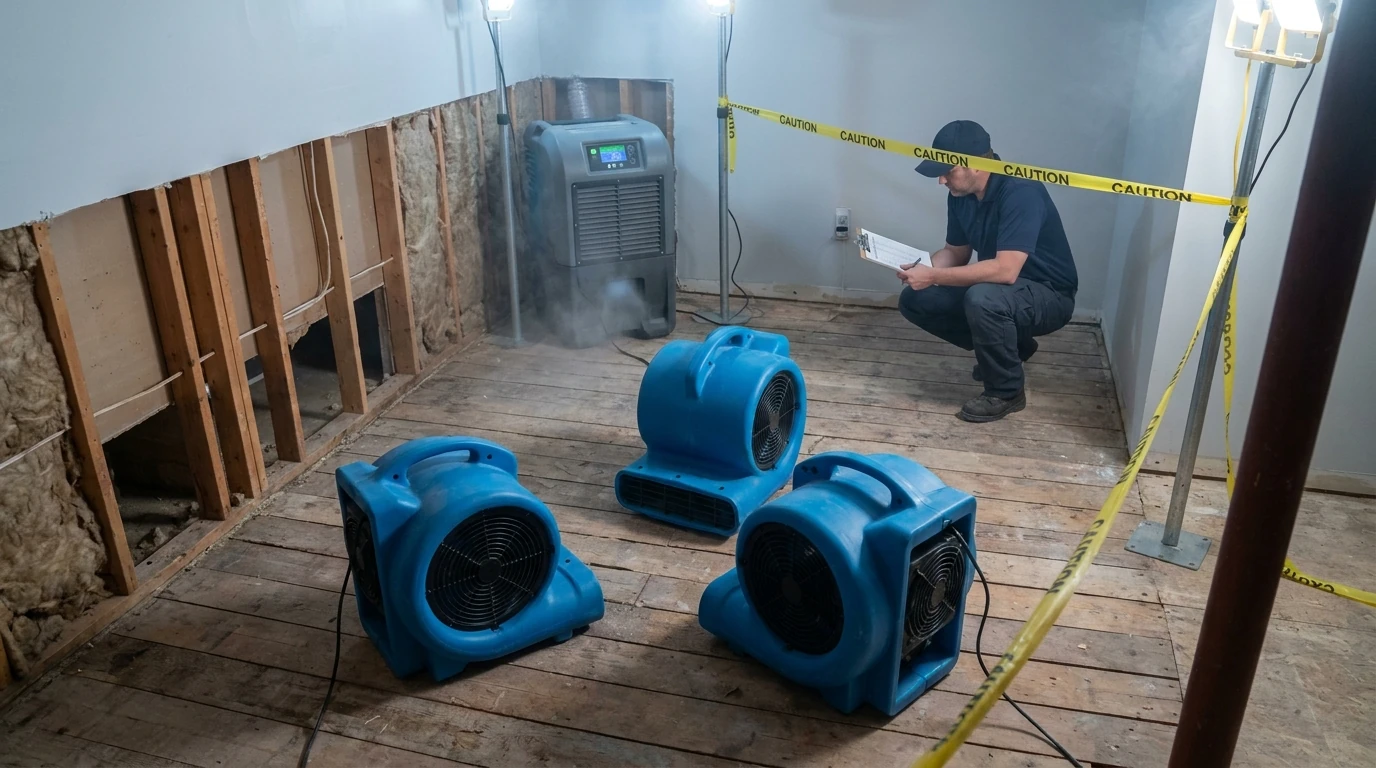
Drying time and equipment count. Structural drying typically runs 3 to 5 days with air movers and a commercial dehumidifier monitoring moisture content daily against the ANSI/IICRC S500 standard. More rooms affected means more equipment running longer, and that’s billed by the day.
After-hours response for a burst that’s actively flowing also adds a line item compared to a scheduled daytime call, since getting a crew out immediately to stop the spread is itself labor.
Will Homeowners Insurance Cover a Frozen Pipe Burst in Macomb?
Most homeowners policies cover sudden, accidental water damage from a burst pipe, but freeze damage specifically often has conditions attached. Insurers generally expect the home to have been reasonably heated, and a pipe that freezes in a vacant or unheated property can be excluded or limited.
The Insurance Information Institute notes that standard homeowners policies typically cover sudden and accidental discharge of water, which is why a pipe that bursts in an occupied, heated home is usually a covered peril. What trips people up is the fine print: many policies require the homeowner to have kept the heat on at a minimum temperature, or to have shut off and drained the water system if the property sits vacant for an extended stretch. If neither happened, the adjuster may deny or reduce the claim.
Before assuming either way, check the actual policy language or call the carrier. The Michigan Department of Insurance and Financial Services is also the place to go if a claim gets denied and the homeowner wants to understand their rights or file a complaint. Documentation matters here: photos before anything is moved, moisture readings, and a written drying log all support a claim.
For a broader walkthrough of coverage, our Macomb water damage restoration cost guide covers how adjusters typically scope a water loss and what’s usually itemized on the invoice.
Does This Cost Include Fixing the Pipe Itself?
No. The ranges above cover drying, demolition, and rebuild, not the plumbing repair. A licensed plumber handles cutting out and replacing the burst section of pipe, which is typically billed separately and isn’t part of a restoration company’s scope. Most homeowners end up coordinating two invoices for one event: the plumber’s repair, and the restoration crew’s drying and rebuild work. Keep both invoices for the insurance claim, since adjusters usually want to see the full picture of what failed and what it took to fix.
What Happens During the Drying and Restoration Process?
The job runs in a predictable sequence once the water is shut off: assess, extract, demo what won’t dry, dry what will, then rebuild.
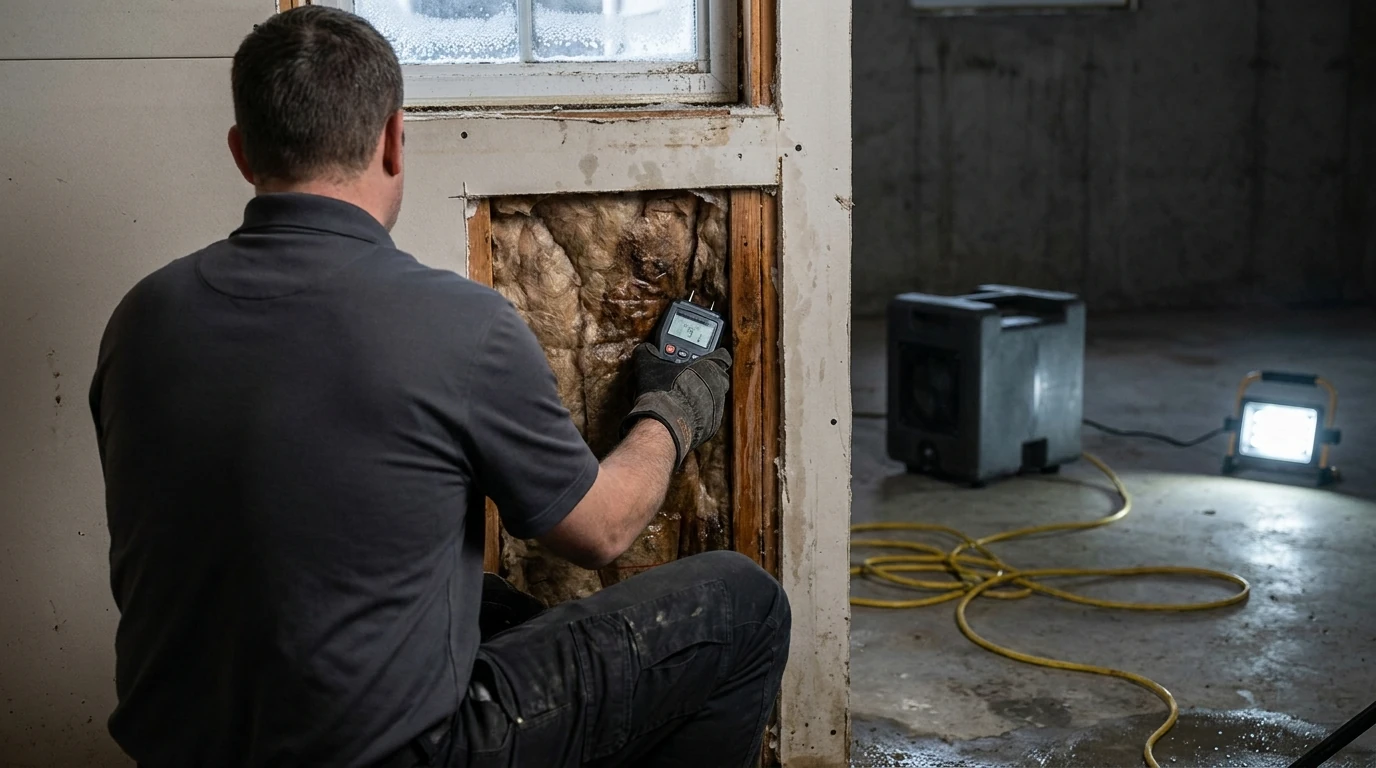
- Shutoff and assessment. Confirm the water source is off, then walk the affected area with a moisture meter to map how far the water traveled, including inside walls and under flooring.
- Extraction. Standing water gets pulled with truck-mounted or portable extraction equipment before drying equipment goes in.
- Controlled demolition. Drywall, insulation, and flooring that can’t be dried in place are removed, usually in sections rather than whole rooms, to limit what needs to be replaced.
- Structural drying. Air movers and a commercial dehumidifier run for several days, with daily moisture readings tracked against drying benchmarks until the materials read dry.
- Rebuild. New drywall, insulation, baseboards, and flooring go back in to match what was removed.
An older ranch home in Macomb Township with a crawl space often dries differently than a two-story with a finished basement near the Hall Road corridor, which is part of why an on-site assessment matters more than a phone estimate.
If water is actively running right now, shutting off the main valve comes first. For a step-by-step order of operations, see our burst pipe emergency checklist. Once the water’s stopped and you’re looking at next steps, Flood Solutions inc can send a crew to assess the damage and provide a written drying scope before any work starts.
About Flood Solutions inc
Flood Solutions inc has served Macomb, MI and surrounding communities including Sterling Heights, Warren, and Clinton Township since 1996. The company is licensed and insured and runs a 24/7 emergency line for water damage calls. Their work covers water damage restoration, emergency water removal, sewage cleanup, fire damage restoration, and related services across Macomb County, with technicians following the ANSI/IICRC S500 standard for structural drying on water losses.