TL;DR: Water damage in Chesterfield, MI comes in many forms: burst pipes, basement flooding, appliance leaks, sewer backups, and storm-driven intrusion. The source and the water category (clean, gray, or black) determine how fast you need to act and what the restoration process looks like. Stop the water source if it’s safe, document everything before touching it, and call a licensed restoration company. Mold can begin growing within 24 to 48 hours, so speed matters regardless of the cause.
You came home to standing water in your basement near Anchor Bay, or you walked into your kitchen and found the dishwasher line had been leaking behind the cabinet for who knows how long. Maybe a storm rolled through Chesterfield Township and water pushed in through the foundation. Whatever the source, the first question is the same: what kind of damage is this, and what do I do right now? This guide answers both.
What Types of Water Damage Do Chesterfield Homeowners Actually Deal With?
Water damage falls into a few distinct categories, and the type you have determines the urgency, the safety precautions, and the restoration scope. Industry standards for water damage restoration classify water by contamination level:
- Category 1 (clean water): Comes from a sanitary source. A broken supply line, a failed ice maker connection, or an overflowing sink with clean water. Lowest health risk, but still causes serious structural damage if left wet.
- Category 2 (gray water): Contains some contamination. Washing machine discharge, dishwasher overflow, or toilet overflow without solid waste. Can cause illness if contacted or ingested.
- Category 3 (black water): Grossly contaminated. Sewer backups, flooding from rivers or storm drains, or any water that has sat long enough to grow bacteria. Requires full PPE and specialized disposal protocols.
Beyond water category, professional water damage categories also classify losses by how far water has spread into materials (Class 1 through 4). A slow leak behind a wall that saturated the framing is a Class 3 or 4 loss, much harder to dry than a Category 1 puddle on a tile floor.
Common sources Macomb County homeowners see include burst pipes during freeze-thaw cycles, sump pump failures during heavy rain, water heater tank failures, roof leaks that track down interior walls, and storm-driven basement intrusion. Each one is different, but the response framework is the same.
What Should You Do in the First Hour After Water Damage?
The first hour determines how much damage you can limit. Here is what to do, in order:
- Stop the source if you can safely do so. Shut off the main water supply if a pipe burst. Do not enter a basement with standing water if you are not certain the electrical panel is dry and the circuit is off.
- Document before you touch anything. Walk through with your phone and take video. Capture the source, the affected rooms, the waterline on walls, and any damaged contents. This footage is your insurance claim’s foundation. Our post on what to do in the first 24 hours after water damage covers this step in detail.
- Move valuables and irreplaceable items out of the wet zone if it is safe to do so. Keep them nearby, do not haul them to a dry room and forget to photograph them first.
- Do not use a household vacuum or fan to dry the space. A shop vac is not designed for structural drying. Box fans push humid air around without removing moisture from materials. You need extraction equipment and LGR (low-grain refrigerant) dehumidifiers.
- Call a licensed restoration company. The longer wet materials sit, the more damage spreads into subfloors, wall cavities, and framing. Category 2 and 3 water losses need professional handling from the start.
For sewer backups specifically: do not attempt cleanup yourself. Category 3 water contains pathogens. The EPA’s guidance on sewage and flooding addresses the health risks of contaminated water in residential spaces.
How Does the Restoration Process Work for Any Type of Water Damage?
Professional water damage restoration follows a structured process regardless of the source. Understanding the phases helps you know what to expect and what questions to ask.
Phase 1, Assessment and moisture mapping. A technician uses a calibrated moisture meter and thermal imaging to find where water has traveled, including inside walls and under flooring. You cannot dry what you cannot find.
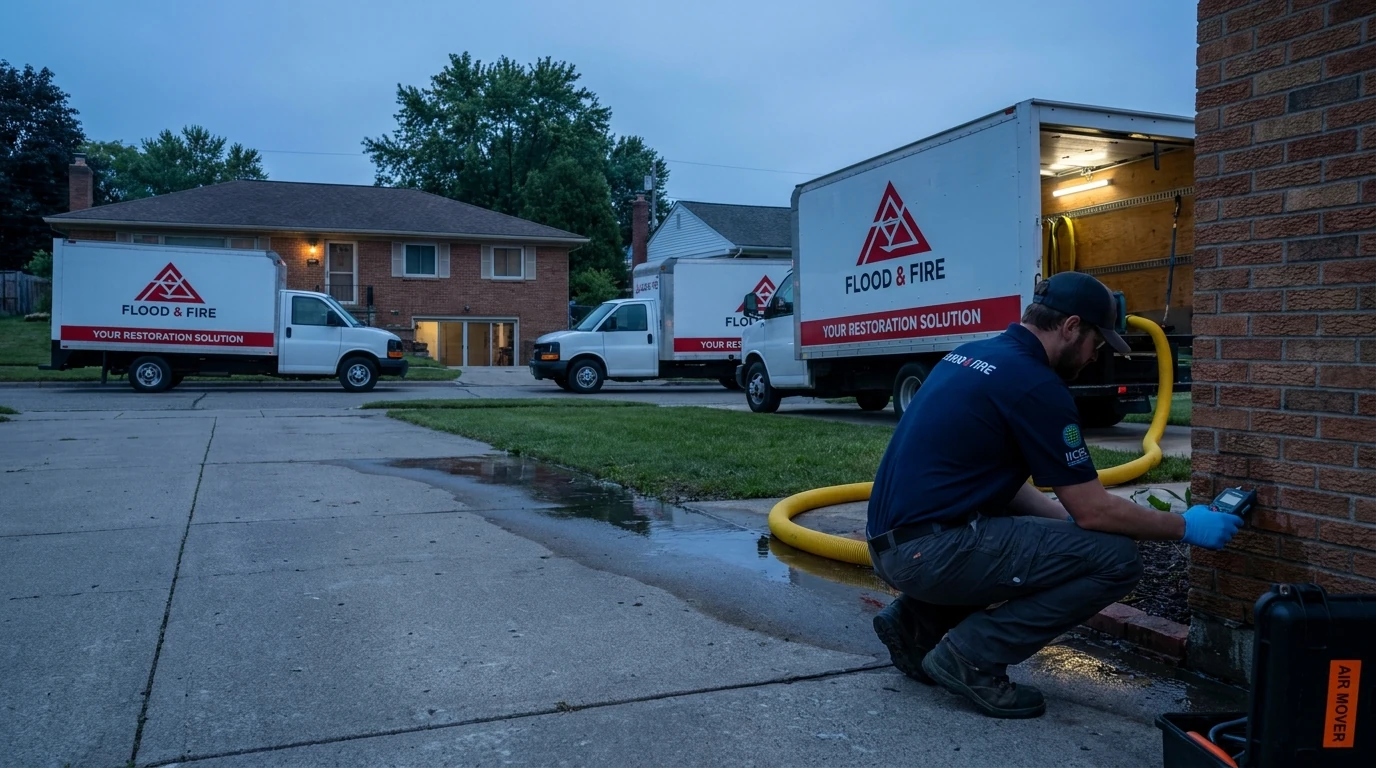
Phase 2, Water extraction. Truck-mounted or portable extractors remove standing water and pull moisture from carpet and porous materials. This is not optional, it is the foundation of everything that follows (see emergency water removal).
Phase 3, Structural drying. Air movers (high-velocity fans positioned at specific angles per industry drying standards) combined with LGR dehumidifiers create a controlled drying environment. Drying typically takes 3 to 5 days for a standard loss, longer for Class 3 and 4 losses with saturated framing or concrete. Our post on how long water damage restoration actually takes breaks down the timeline by loss type.
Phase 4, Monitoring. Daily moisture readings confirm materials are drying on schedule. A reputable company provides written moisture logs, your insurance adjuster will ask for them.
Phase 5, Antimicrobial treatment and content handling. Affected surfaces are treated to inhibit mold growth. Salvageable contents are documented; non-salvageable materials are itemized for the claim.
Phase 6, Reconstruction scope. Once materials are dry and the industrial hygiene clearance is confirmed, any removed drywall, flooring, or insulation is rebuilt. Some restoration companies handle reconstruction in-house; others hand off to a general contractor.
If mold is already visible when the restoration crew arrives, the scope expands to include mold remediation. Mold can begin colonizing wet drywall and wood in as little as 24 to 48 hours under warm, humid conditions, a real concern in Michigan’s late-summer humidity. Read more about how quickly mold grows after water damage if you are concerned about timing.
Will Insurance Cover Water Damage of Any Kind?
Homeowners insurance covers water damage in some situations and excludes it in others. The distinction that matters most: sudden and accidental versus gradual.
A burst pipe that floods your utility room overnight is typically covered. A slow leak under the kitchen sink that rotted the cabinet floor over six months is typically excluded as a maintenance issue. Sewer backup coverage is often a separate rider that many homeowners do not know they lack until they need it. Ground flooding from a storm is covered only by a separate flood insurance policy through the National Flood Insurance Program (NFIP), standard homeowners policies do not cover it.
For a full breakdown of what policies typically pay, what gets denied, and how to document your claim correctly, see our guide on whether homeowners insurance covers water damage.
The documentation you create in the first hour, video, photos, written notes on when you discovered the damage, is what protects your claim. A restoration company that provides written moisture logs and a detailed scope of work makes the adjuster’s job easier and reduces the chance of a disputed claim.
What Should You Do Next If You Have Water Damage in Chesterfield?
If you have active water damage right now, the priority is stopping the source, documenting the scene, and getting a licensed restoration crew on-site before materials deteriorate further. The longer wet drywall, insulation, and framing sit, the more likely you are to face a mold remediation cost on top of the water damage bill.
Flood & Fire Solutions is a licensed and insured water damage restoration company serving Chesterfield, Clinton Township, Shelby Township, and the surrounding Macomb County area since 1996. Their crews handle water extraction, structural drying, moisture mapping, and the documentation your insurance claim requires. To schedule an assessment or get a written scope of work, call (586) 580-0197.
About Flood & Fire Solutions
Flood & Fire Solutions is a locally owned and operated, licensed and insured restoration company based in Macomb, MI, serving Chesterfield, Clinton Township, Sterling Heights, Shelby Township, and surrounding communities since 1996. Their team specializes in water damage restoration, from initial extraction and structural drying to moisture documentation and scope preparation for insurance claims. For water damage of any kind in Macomb County, call (586) 580-0197.