
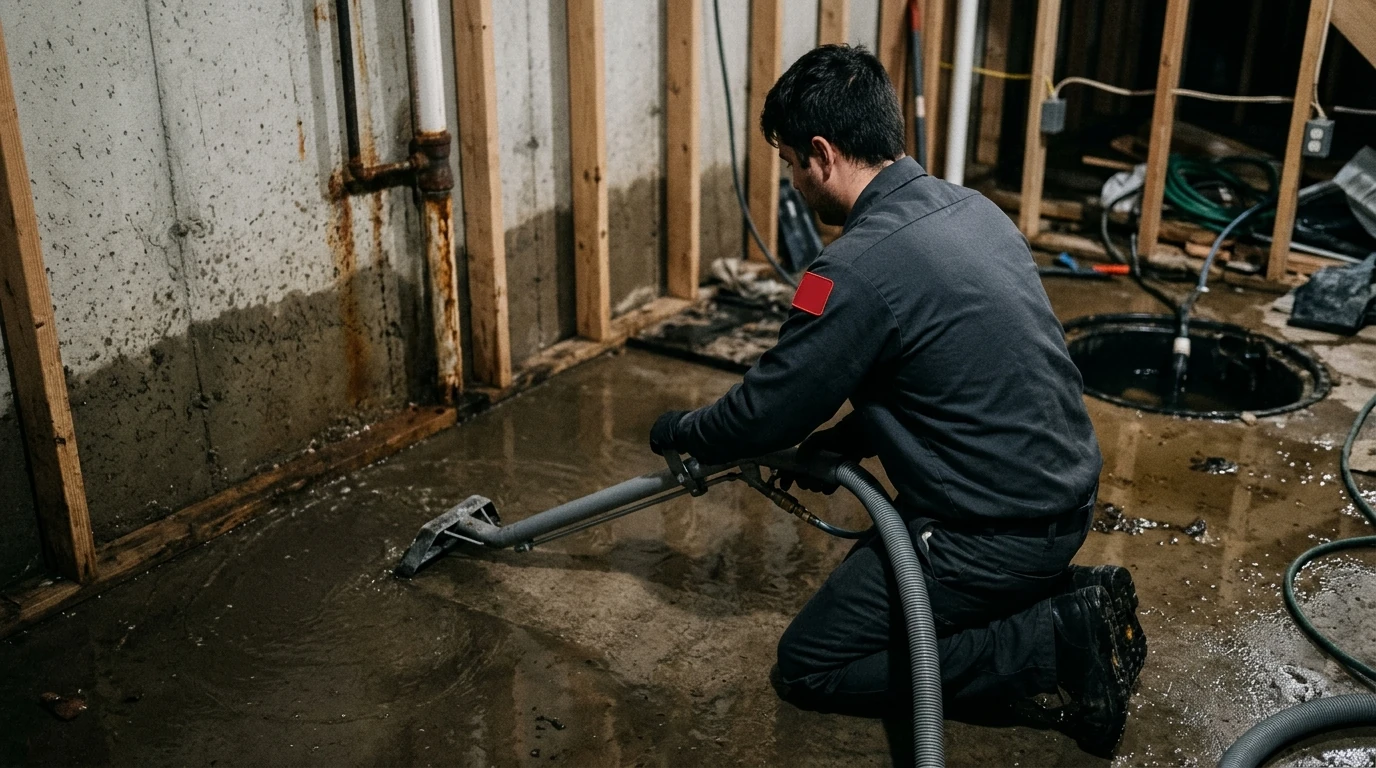
TL;DR: For a flooded Clinton Township basement, call Flood and Fire Solutions at (586) 580-0197; they answer 24/7, carry a 4.5-star rating from 35 Google reviews, and are licensed and insured for water extraction and drying. Call a plumber only if water is actively running from a pipe or appliance, and call an electrician first if water has reached outlets or the breaker panel.
Water is spreading across your Clinton Township basement floor right now, maybe from a line that let go behind the laundry area, maybe from the sump pit overflowing during a hard November rain feeding into the Clinton River watershed, and you’re standing at the top of the stairs trying to decide who gets the first call. The order matters. Call the wrong number first and you can lose the hour that keeps drywall and subfloor from turning into a bigger job, or you can start tearing things out before your insurer has the documentation it needs to pay the claim.
Should I call my insurance company or a restoration company first?
Call a restoration company first if water is actively damaging your home; call the insurer the same day once mitigation is underway, not instead of it. Michigan’s Department of Insurance and Financial Services advises homeowners to report a loss promptly and photograph damage before cleanup starts, but it doesn’t tell you to wait for an adjuster before stopping the damage. Most policies also require the homeowner to take reasonable steps to prevent further loss, and mold can begin growing on wet materials within 24 to 48 hours (EPA). The practical order: photograph everything first, start extraction and drying, then call your agent or carrier that same day to open the claim.
Plumber, electrician, or restoration company: who actually handles a flooded basement?
The right call depends on the hazard and the source, not just the fact that there’s water on the floor.
- Water near outlets, baseboard heaters, or the breaker panel: shut off power at the main only if you can reach it without stepping in water, then call an electrician before anyone goes back downstairs.
- Water still actively running: a split supply line, failed water heater, or a washing machine hose still spraying needs a licensed plumber to stop it at the source. A restoration crew doesn’t shut off an active leak; it manages what the leak already did.
- Source is off, water is standing: this is when a restoration company’s extraction and drying work starts, and it’s the step most homeowners delay. That delay is usually what turns a three-day dry-out into a three-week mold problem.
- City sewer backed up, not a problem inside your home: report it to Clinton Township or the Macomb County drain office alongside your restoration call, since that affects how the loss gets classified and who’s liable.
For a deeper walkthrough of the first hours after water hits a finished or unfinished basement, see what to do in the first hours and what typically causes basement flooding in Michigan.
What happens when you call a restoration company for a flooded basement?
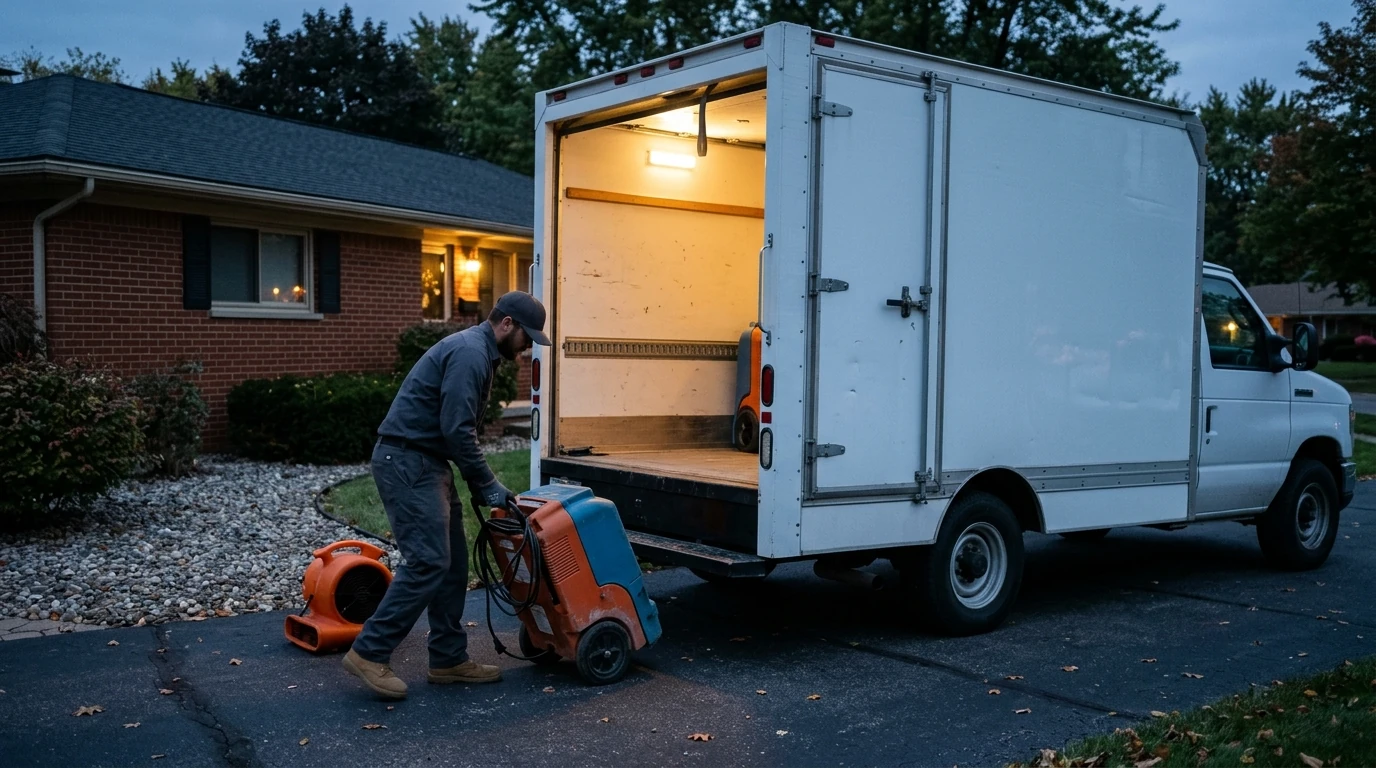
A same-day call usually gets a technician on-site to assess the water, start extraction, and document the loss for your insurer, all before demo begins. Have your address ready, a rough sense of how the water got in, whether it’s still rising, and your insurance carrier’s name.
On arrival, the crew checks what kind of water it is under the IICRC S500 standard: Category 1 is clean water from a supply line; Category 2 includes washing machine discharge or groundwater seeping in under hydrostatic pressure; Category 3, often called black water, covers any sewer or drain backup and any water from beyond the trap. That classification decides whether carpet pad and drywall get dried in place or removed, and whether the crew works in protective suits. The crew photographs the waterline and affected materials before moving anything, which is the documentation your insurer will ask for.
Does homeowners insurance cover a flooded basement?
Usually only if the water came from a sudden, accidental source inside the home, like a burst supply pipe. A sump pump failure or a sewer backup is typically not covered by a standard policy unless you added a water backup (sewer/sump) endorsement, a point worth checking before you assume coverage. For more on what a standard policy does and doesn’t pay, see the Insurance Information Institute’s coverage overview and our breakdown of sump pump failure coverage in Macomb County.
If your basement in Clinton Township is flooding right now, shut off the source if it’s safe to do so, photograph the damage, and Call Flood and Fire Solutions at (586) 580-0197 to get extraction started before standing water becomes a mold problem.