Mold Inspection and Testing in Troy
Mold inspection and testing in Troy, MI. Insurance billing accepted. Call (586) 580-0197.
Our technicians are dispatched from our Macomb, MI headquarters and are typically on-site in Troy within 60 minutes of your call.
Troy’s mix of post-war ranch homes and newer subdivisions built on the clay-heavy soils common across Oakland County creates conditions where moisture lingers long after a visible leak is resolved. That trapped humidity, especially through the long Michigan shoulder seasons when windows stay closed and HVAC systems cycle inconsistently, gives mold spores exactly the foothold they need. If you’ve noticed a musty odor in a finished basement or a discolored patch near an exterior wall, a professional mold inspection and testing appointment is the right first step before any remediation work begins.
Why Troy Properties See Mold Issues
Oakland County’s clay-dense subsoil drains slowly. After heavy spring rains or a winter thaw, water doesn’t percolate away quickly, and hydrostatic pressure builds against basement walls and slab edges. Homes built in the 1960s through the 1980s, which make up a large share of Troy’s residential stock, frequently have block foundation walls that are porous by nature. Block foundations wick moisture inward gradually, and because the migration is slow, surface readings can appear normal while the interior of a wall cavity stays damp enough to sustain mold growth for weeks.
Troy’s winters compound the problem. When outdoor temperatures drop sharply and interior heating runs continuously, cold exterior walls create condensation zones on the inside surface, particularly around window frames, rim joists, and any area where insulation has settled or was never fully installed. These are the spots mold inspectors look at first, because they’re where the moisture budget consistently runs over.
Our Mold Inspection and Testing Process in Troy
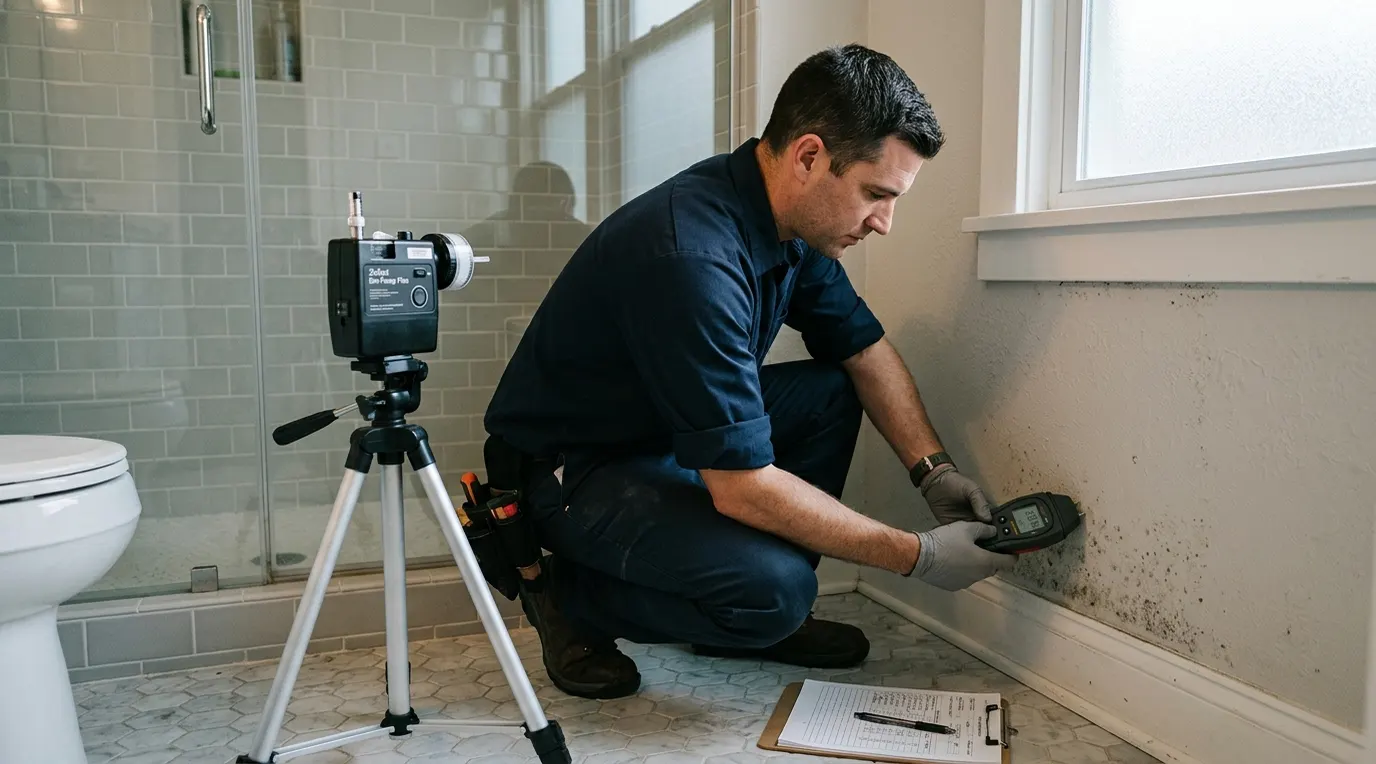
A mold assessment is not a single swab and a report. The process starts with a visual walkthrough using moisture meters and thermal imaging to map areas where humidity is elevated or where building materials are reading wet beneath the surface. This step matters in Troy specifically because finished basements and drywall-over-block construction can hide active moisture intrusion that isn’t obvious to the eye.
Once problem zones are identified, air samples and, where warranted, surface samples are collected. Air sampling captures the spore count and species profile of what occupants are actually breathing, which is the core of indoor air quality testing. Surface samples help confirm whether a stain is mold or something else entirely. All samples are sent to an accredited third-party laboratory. The written report you receive identifies the species present, compares indoor spore counts to outdoor baseline levels, and notes which areas warrant remediation and which are within normal range.
The inspection and the remediation are kept as separate scopes intentionally. An independent assessment protects you: the findings drive the remediation plan rather than the other way around.
Equipment and Methods We Use for Mold Assessment
Thermal imaging cameras detect temperature differentials that point to moisture behind finished surfaces without requiring destructive opening of walls. Calibrated pin and pinless moisture meters give readings at different depths so inspectors can distinguish surface condensation from deeper saturation. Air sampling pumps draw a measured volume of air through a spore trap cassette at each collection point, ensuring the lab analysis reflects actual conditions rather than a momentary spike.
For Troy homes with finished lower levels, inspectors also check mechanical spaces carefully. HVAC air handlers, humidifiers, and condensate drain lines are common mold sources that get overlooked when attention focuses only on the visible living space.
Local Note
Troy’s newer subdivisions, particularly those developed in the 1990s and early 2000s along the northern corridors of the city, were built with OSB sheathing and paper-faced drywall that are significantly more mold-susceptible than the older plaster and masonry construction found closer to the city’s center. When mold spore testing turns up elevated Stachybotrys or Chaetomium counts in these homes, the source is often a slow roof leak or a failed window flashing that has been feeding moisture into the wall cavity for a full season before any visible sign appears inside. Inspectors working in this part of Troy routinely probe the attic and exterior wall assemblies even when the complaint originates in a finished room below.
Troy Insurance and HOA Coordination
Mold inspection reports carry weight with insurance carriers when they are produced by a qualified inspector using laboratory-verified sampling rather than a visual-only walkthrough. A detailed written assessment with lab results gives your adjuster the documentation needed to evaluate a claim accurately. Flood Solutions inc prepares reports in a format that supports the claims process, including photo documentation and moisture mapping that adjusters can reference directly.
Some Troy HOA communities also require documented mold assessments before approving remediation work on shared walls or common-area mechanical systems. If your property falls under an HOA, confirm their documentation requirements before scheduling remediation, and keep the inspection report accessible throughout the process.
If you’re dealing with a musty smell, a suspicious stain, or the aftermath of any water intrusion in Troy, a mold inspection is the step that turns uncertainty into a clear, documented picture of what’s actually in your home. Call Flood Solutions inc at (586) 580-0197 to schedule your mold inspection and testing appointment.
Serving Troy from our Macomb headquarters — ★ 4.4 · 35 Google reviews
“Very knowledgeable and friendly employees. I had a flooded crawl space that I couldn't take care of myself. But Louis and his crew talked me through the whole process and then finished the job quickly and thoroughly.” — Chuck, October 2025Read our reviews on Google →
Mold Inspection and Testing in Troy: Service Coverage
Frequently Asked Questions
How fast can you arrive for mold inspection and testing in Troy?
How does Troy's clay soil affect the likelihood of mold developing in my basement?
Are the older ranch-style homes in Troy more prone to hidden mold than newer construction?
What does a mold spore testing report actually tell me, and how do I use it?
How long does a mold inspection take for a typical Troy home?
Does Flood Solutions inc serve Troy from its Macomb location, and how does that affect scheduling?
Will my homeowners insurance cover mold inspection and testing in Troy?
Mold Inspection and Testing response in Troy
Most Troy calls see a technician on-site within 60 minutes from our Macomb headquarters.